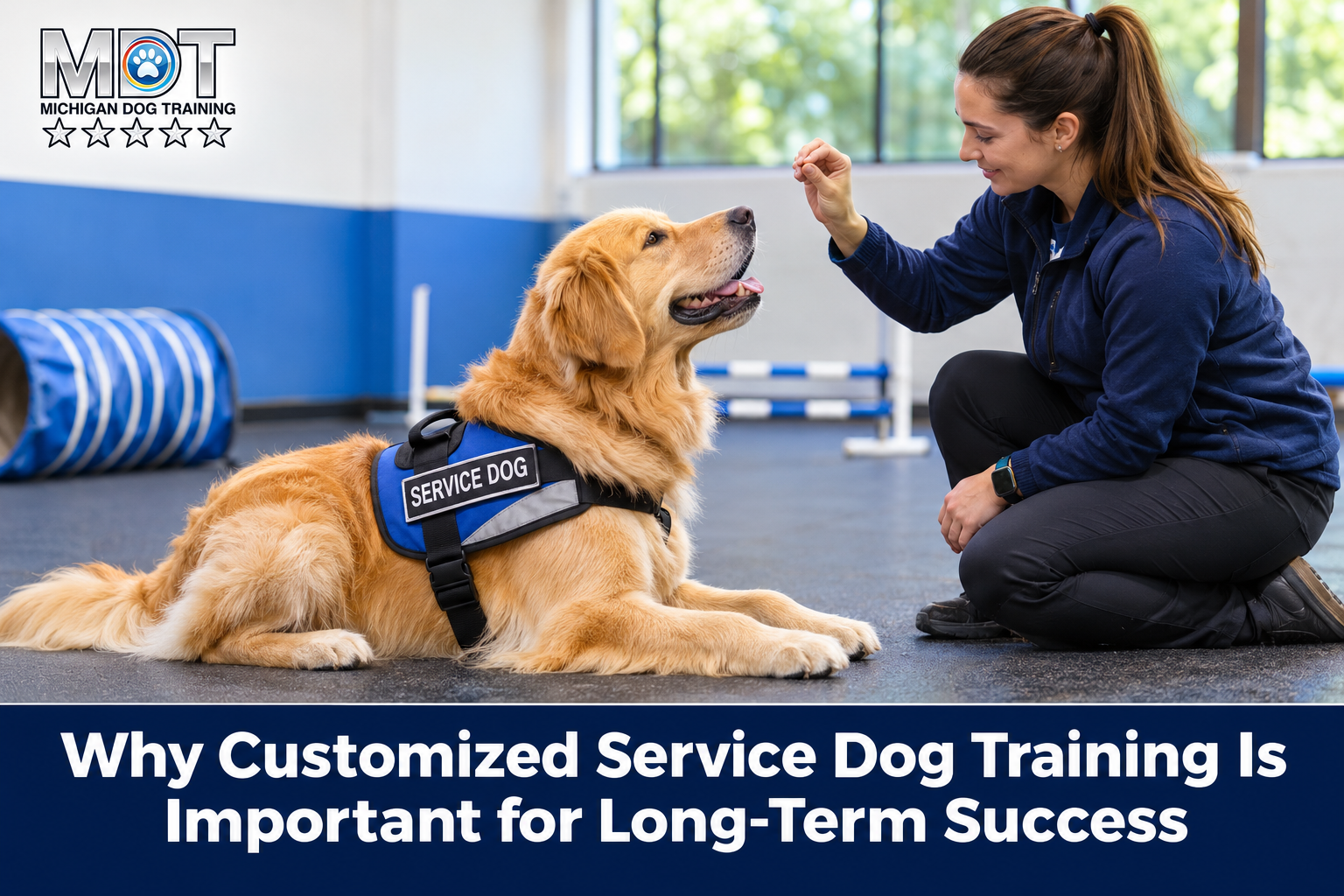
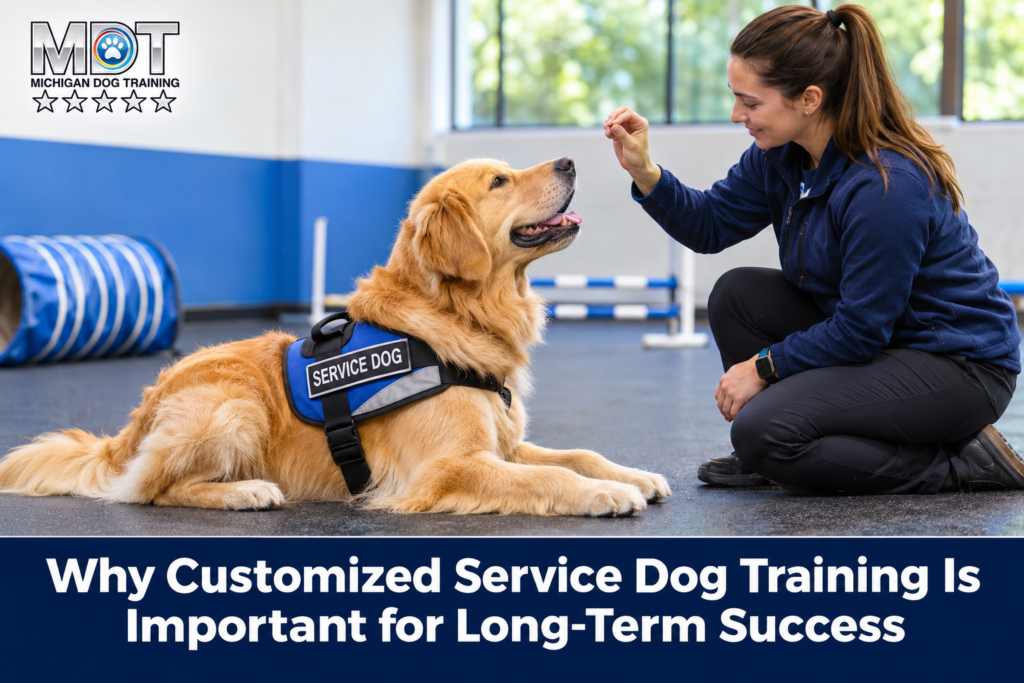
Customized service dog training is essential because every dog and handler has unique needs, abilities, and daily challenges. Personalized training builds reliable skills, strengthens communication, and helps service dogs respond confidently in real-life situations. With consistent guidance and individualized support, dogs can develop lasting behaviors that ensure long-term success and independence.
Introduction
Customized service dog training plays an important role in helping dogs develop the skills needed to support their handlers in everyday life. Since every individual has different needs, challenges, and routines, a personalized training approach ensures that each dog learns tasks suited to its handler’s specific requirements. Rather than following a general training program, customized service dog training focuses on building essential behaviors, improving communication, and strengthening trust between dogs and their handlers. Moreover, consistent practice and professional guidance help service dogs become more confident, reliable, and adaptable, creating a strong foundation for long-term success and independence.
Understand Why Every Service Dog Needs a Personalized Training Approach
Not every service dog performs the same responsibilities. Some assist with mobility challenges, while others respond to medical conditions, hearing needs, or disability-related psychiatric situations. Therefore, training must reflect the handler’s individual requirements. Tailored service dog training programs identify these differences and establish realistic learning goals, ensuring every dog develops useful skills for its specific working role.
Build Essential Skills Through Specialized Service Dog Training
Specialized service dog training focuses on developing practical abilities that help dogs support their handlers consistently. Instead of teaching commands without considering their purpose, trainers connect each skill with an everyday situation. For example, a dog might learn to retrieve essential items, recognize specific sounds, or respond to a trained cue during a medical or psychiatric episode.
Strengthen Everyday Reliability With Consistent Behavior Training
A service dog must remain calm, attentive, and responsive in different environments. Service dog behavior training helps dogs manage distractions, follow instructions, and develop appropriate manners around unfamiliar people and animals. Furthermore, consistent practice teaches dogs how to settle quietly, walk politely, and maintain focus, even when everyday surroundings become busy or unpredictable.
Important behavior goals often include:
- Remaining calm around unfamiliar people and animals.
- Walking beside the handler without pulling.
- Ignoring dropped food and distracting noises.
- Settling quietly in appropriate public environments.
- Responding reliably to familiar commands and cues.
- Recovering calmly after unexpected environmental changes.
Improve Communication Through One-on-One Service Dog Training
Personalized attention makes it easier to address individual learning challenges. One-on-one service dog training allows trainers to understand a dog’s temperament, learning speed, strengths, and behavioral needs. At the same time, handlers receive practical instructions and feedback. This approach strengthens communication, encourages consistency, and helps both partners develop confidence throughout the training process.
Create Custom Training Plans That Support Real-Life Needs
Custom service dog training plans connect training exercises with the handler’s daily responsibilities and disability-related needs. A mobility assistance dog may practice retrieving objects, whereas a hearing assistance dog may learn to alert its handler to important household sounds. Consequently, individualized goals make training more meaningful and help teams prepare for situations they regularly encounter.
A customized plan may focus on:
- Disability-related assistance tasks and trained responses.
- Home routines and everyday household responsibilities.
- Appropriate public behavior and environmental confidence.
- Handler communication and effective command delivery.
- Gradual exposure to unfamiliar sounds and surroundings.
- Regular progress reviews and adjustments to training goals.
Establish Strong Foundations With Service Dog Obedience Training
Obedience creates the foundation for dependable service work. Service dog obedience training teaches essential commands such as sit, stay, come, heel, and leave it. However, dogs must also perform these behaviors around distractions. Regular reinforcement, clear communication, and appropriate practice help transform basic commands into reliable everyday habits.
Prepare Dogs for Different Public Environments
Public environments introduce distractions that dogs may not experience at home. Shopping centers, restaurants, sidewalks, elevators, and transportation areas all require different behavioral skills. Therefore, trainers gradually introduce dogs to appropriate environments while monitoring their comfort and readiness. This preparation helps service dog teams navigate everyday activities with greater confidence, control, and safety.
Strengthen the Bond Between the Dog and Handler
Long-term success depends on more than a dog’s ability to follow commands. The relationship between the dog and handler also matters. Positive interactions, consistent communication, and shared training experiences develop trust. As a result, dogs become more comfortable responding to their handlers, while handlers learn to recognize their dogs’ signals, needs, and behavioral changes.
Monitor Progress and Adjust Training Goals Over Time
Training should evolve as dogs develop new abilities and handlers’ needs change. Regular evaluations help identify skills that require additional attention, reinforce successful behaviors, and address emerging challenges. Moreover, continued practice prevents previously learned commands from becoming inconsistent. A flexible training plan keeps the team focused on practical goals throughout its working partnership.
Give Handlers the Knowledge to Maintain Long-Term Success
Professional instruction is important, but handlers must also understand how to maintain their dogs’ training outside formal sessions. Trainers can demonstrate effective reinforcement, communication, and task practice. For lasting results, handlers should:
- Practice familiar commands regularly at home.
- Reinforce calm and appropriate public behavior.
- Follow consistent cues and training expectations.
- Recognize signs of fatigue, stress, or discomfort.
- Schedule additional guidance when challenges develop.
Additionally, handlers should allow their dogs adequate rest, exercise, veterinary care, and opportunities to enjoy normal dog activities.
Choose the Right Professional Support for Your Service Dog Journey
Choosing an experienced trainer can make the training process more organized and productive. Look for professionals who evaluate each dog’s suitability, understand disability-related tasks, and involve handlers throughout the process. For personalized guidance, explore Michigan Dog Training’s Service Dog Training Program. The right support can help establish realistic expectations and build a stronger foundation for lasting success.
Final Thoughts
Customized service dog training is essential for developing reliable skills, building confidence, and creating a strong bond between dogs and their handlers. Since every handler has unique needs, personalized training ensures that dogs receive the guidance and practical experience necessary to perform their tasks successfully. Moreover, consistent practice, professional support, and positive reinforcement help maintain these skills over time. Investing in the right training approach can make a lasting difference in everyday independence and confidence. With expert guidance from Michigan Dog Training, handlers can help their service dogs achieve long-term success.
FAQs
Q: Why is customized service dog training important?
A: Customized training addresses individual disability-related needs, daily routines, and specific assistance tasks. It helps dogs develop practical skills instead of relying on a general obedience routine that may not suit every handler.
Q: How do tailored service dog training programs work?
A: These programs begin by evaluating the dog’s temperament, behavior, and abilities alongside the handler’s requirements. Trainers then establish individual goals, teach appropriate tasks, and gradually develop obedience and public behavior.
Q: Can any dog become a service dog through specialized training?
A: No. Although many dogs can learn useful commands, not every dog has the temperament, health, confidence, and behavioral stability required for service work. A professional evaluation helps determine suitability.
Q: How long does customized service dog training take?
A: The timeline depends on the dog’s learning ability, required tasks, previous experience, and handler participation. Some programs provide intensive training, while others involve several months of structured lessons and regular practice.
Q: Does service dog obedience training include public behavior?
A: Yes. A comprehensive program typically develops basic obedience, calm behavior, reliable responses, and appropriate manners in suitable public environments. Dogs also learn to remain focused despite common distractions.