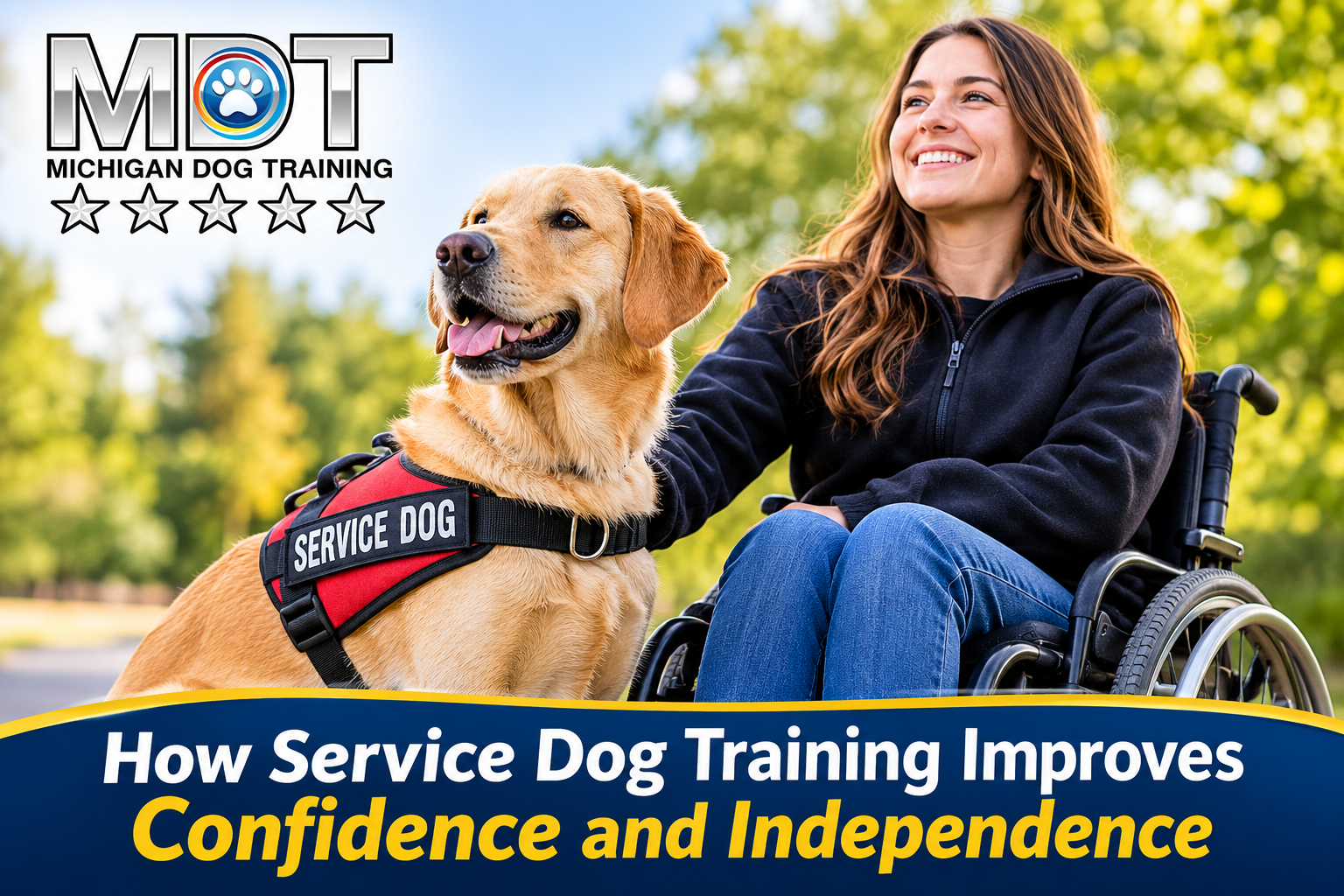
Service dog training builds confidence by teaching dogs reliable skills that help their handlers manage everyday tasks more safely and independently. With consistent support and obedience, service dogs can reduce reliance on others and help their handlers feel more secure in daily life.
Introduction
Service dog training can make a meaningful difference in a person’s daily life by building confidence, independence, and a stronger sense of security. A well-trained service dog learns to perform specific tasks, provide reliable assistance, and respond appropriately in different environments. As individuals become more comfortable relying on their dogs, they may feel more confident handling everyday activities, traveling, working, or interacting with others. In addition, the bond between a handler and a service dog encourages trust and emotional support. With consistent training and professional guidance, service dogs can help their handlers overcome challenges, gain greater independence, and enjoy a more active and fulfilling lifestyle.
Build a Strong Foundation With Service Dog Training
Confidence begins with consistency. Before performing advanced tasks, a service dog must master basic commands like sit, stay, come, down, and heel. These foundational behaviors help dogs develop discipline and responsiveness. Through structured training, dogs gradually learn to follow instructions, manage distractions, and support their handlers confidently.
Discover How Obedience Training Creates Confidence
Obedience training helps service dogs remain attentive, calm, and responsive in different environments. Dogs learn to follow commands, ignore distractions, and behave appropriately around people and animals. This reliability helps handlers feel more comfortable during daily activities. Additionally, consistent communication strengthens their partnership and makes public outings easier to manage.
Gain Independence Through Disability-Specific Tasks
Service dogs perform specially trained tasks that assist individuals with disabilities. These tasks may include retrieving dropped objects, opening doors, providing alerts, or supporting mobility-related activities. Personalized training ensures each dog learns behaviors suited to its handler’s needs. As a result, handlers can complete everyday activities with greater independence and confidence.
Improve Confidence in Public Places
Public-access training prepares service dogs to behave appropriately in stores, offices, sidewalks, and other suitable public environments. Dogs learn to remain focused, avoid unnecessary reactions, and follow their handlers’ instructions. Regular practice helps handlers become familiar with different situations. Sc c coocih, they can approach public activities with greater comfort and confidence.
Prepare for Real Life With Service Dog Preparation
Real-world preparation helps service dogs apply their training beyond classrooms and familiar surroundings. Gradually introducing different sounds, surfaces, people, and distractions improves their adaptability. Handlers also learn to manage equipment, provide clear commands, and reinforce positive behavior. This practical experience supports safer outings and builds confidence for everyday situations.
Strengthen Trust Between Handler and Dog
Trust zfszaqbduse bdu relationship between service dogs and their handlers. Positive reinforcement encourages desirable behavior through praise, treats, and other appropriate rewards. Meanwhile, handlers learn to recognize signs of stress, excitement, and distraction. Understanding these signals improves communication, strengthens cooperation, and helps both partners work together comfortably.
Use Professional Guidance to Overcome Training Challenges
Professional guidance helps handlers address behavioral challenges and develop reliable training techniques. An experienced trainer can evaluate a dog’s temperament, identify weaknesses, and recommend suitable exercises. Handlers also learn how to reinforce positive behavior and manage distractions. This structured support improves consistency and prepares both partners for successful service work.
Turn Small Training Wins Into Everyday Independence
Small training achievements can create meaningful improvements in everyday life. Retrieving objects, waiting patiently, and responding to specific commands can help handlers manage daily responsibilities. These abilities may reduce their dependence on other people. Over time, consistent assistance can make shopping, studying, traveling, and other activities more manageable.
Understand the Importance of Long-Term Training
Service dog training requires continuous practice to maintain reliable behavior and specialized skills. Regular reinforcement helps dogs respond consistently, even when environments or routines change. Handlers should also adjust training as their needs evolve. Ongoing assessments and appropriate guidance support a dependable partnership throughout the dog’s working life.
Choose a Training Approach That Fits Your Needs
Every service dog handler has different requirements, making personalized training important. Some individuals prefer professional instruction, while others combine expert guidance with owner-led training. Consider the trainer’s experience, teaching methods, task preparation, and ongoing support. A suitable program should prioritize safety, reliability, realistic expectations, and effective communication.
Take the Next Step Toward Greater Confidence
Service dog training can help individuals develop a dependable partnership that supports everyday independence. From basic obedience to specialized tasks, each training stage contributes to better communication and confidence. With patience and professional guidance, handlers can achieve meaningful progress. Michigan Dog Training offers specialized training services to help individuals explore their service dog training goals.
Conclusion
Service dog training can make a meaningful difference in a person’s confidence, independence, and everyday quality of life. Through consistent training, service dogs learn to provide reliable support, assist with daily tasks, and respond appropriately to their handler’s needs. As a result, individuals can feel more secure and confident while navigating daily activities and social situations. With the right guidance, patience, and professional support, this powerful partnership can continue to grow stronger over time. If you are looking for expert guidance, Michigan Dog Training can help you explore effective training approaches designed to build obedience, confidence, and a strong bond between dogs and their handlers.
FAQs
Q: How does service dog training improve confidence?
A: Training provides structure, predictable responses, and practical skills. As handlers successfully navigate different environments with their dogs, they may become more comfortable managing everyday situations independently.
Q: What does a service dog learn during training?
A: Training may include basic obedience, public-access behavior, socialization, distraction control, handler communication, and disability-specific tasks. The exact curriculum depends on the dog’s role and the handler’s needs.
Q: Can I train my own service dog?
A: In the United States, the ADA does not require a service dog to be trained by a professional organization. Owner-training is possible, although many people benefit from working with an experienced trainer for guidance, task development, and public-access preparation.
Q: How long does service dog training take?
A: The timeline varies according to the dog’s temperament, age, existing skills, training environment, and complexity of the required tasks. Thorough training commonly takes many months and may extend to a year or longer for advanced work.
Q: What is the difference between obedience training and service dog training?
A: Obedience training teaches foundational behaviors such as sitting, staying, walking politely, and responding to cues. Service dog training builds on those skills by adding disability-specific tasks and reliable behavior in appropriate public environments.
Q: Does a service dog need an official certification?
A: Under the ADA, there is no federal certification or registration requirement for service dogs. A dog qualifies based on being individually trained to perform work or tasks related to a person’s disability, along with meeting applicable behavior and control expectations.
Q: Why is public-access training important?
A: Public-access training teaches a service dog to remain calm, controlled, and focused around distractions. This helps the team navigate appropriate public environments safely and respectfully.
Q: Can service dog training help with independence?
A: Yes. When a dog reliably performs tasks that reduce barriers in everyday life, the handler may be able to complete more activities with less reliance on other people. The specific benefits depend on the individual’s needs and trained tasks.
Q: What should I look for in a service dog trainer?
A: Look for experience with service dog work, positive and humane training methods, individualized task training, public-access preparation, and handler education. A good trainer should also communicate realistic expectations instead of promising instant results.
Q: Is service dog training finished once the dog graduates?
A: No. Training should continue throughout the dog’s working life. Regular practice helps maintain obedience, task reliability, public manners, and communication between the handler and dog.