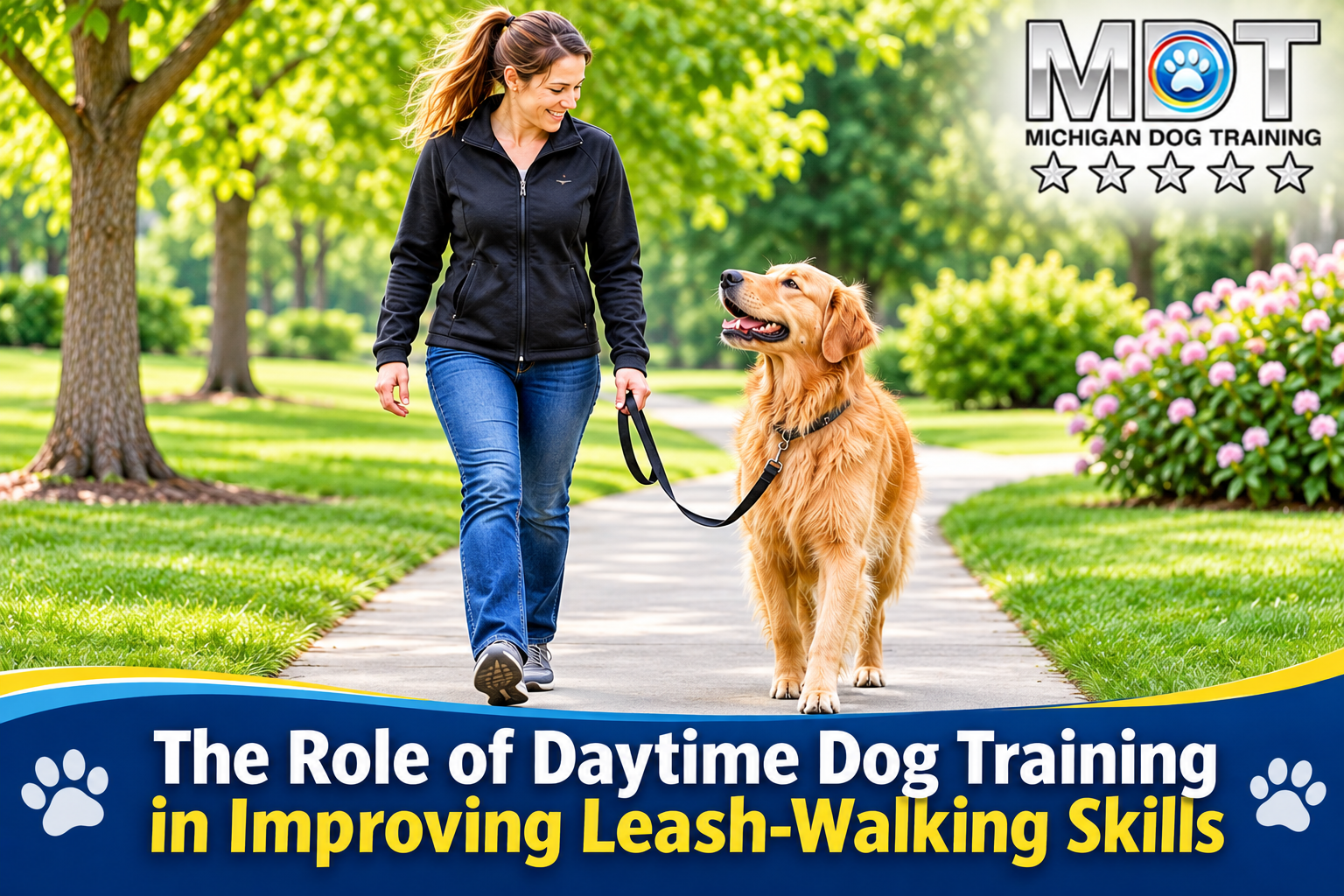
Daytime dog training helps dogs develop better leash-walking skills through consistent practice, positive reinforcement, and professional guidance. It teaches dogs to walk calmly, avoid pulling, respond to commands, and stay focused, making daily walks safer and more enjoyable for both dogs and their owners.
Introduction
Leash walking is an essential skill that helps dogs enjoy safe, comfortable, and enjoyable outdoor experiences. However, many dogs struggle with pulling, barking, distractions, or ignoring their owners during walks. Fortunately, daytime dog training can help address these challenges through structured practice and positive reinforcement. During training sessions, professional trainers teach dogs to follow commands, maintain a steady pace, and respond calmly to their surroundings. Moreover, regular daytime practice helps dogs build confidence, improve focus, and develop better walking habits. With consistent guidance, dogs can learn to walk politely on a leash, making everyday outings more relaxing for owners and their furry companions.
1. Why Leash-Walking Skills Matter for Every Dog
Loose-leash walking helps dogs explore their surroundings without putting constant pressure on their owners’ arms or necks. It also makes neighborhood walks more comfortable and manageable. Good leash manners can reduce stressful encounters, improve responsiveness, and encourage safer outings. Although every dog learns differently, consistent practice and positive reinforcement can make walking together much more enjoyable.
2. How Daytime Dog Training Builds Better Walking Habits
Daytime dog training programs provide structured opportunities for dogs to practice walking skills with an experienced trainer. Rather than addressing pulling only during occasional family walks, trainers can work on attention, pacing, and leash pressure in planned sessions. This repetition helps dogs understand expectations and develop more consistent responses in everyday walking situations.
3. Teach Your Dog to Walk Without Pulling
Pulling often happens because dogs discover that moving forward brings them closer to something exciting. Trainers can change this pattern by rewarding a loose leash and pausing when tension develops. With patient practice, dogs learn that staying near their handler makes walks continue smoothly, without harsh corrections or unnecessary frustration.
4. Use Positive Reinforcement to Encourage Focus
Positive reinforcement helps dogs connect desirable behavior with rewarding outcomes. Trainers may use small treats, praise, toys, or permission to explore as motivation. They reward dogs for checking in, responding to their names, and walking beside them. Over time, these rewards encourage cooperation and help dogs remain engaged during distracting situations.
5. What Professional Daytime Dog Training Can Address
Professional daytime dog training can target several behaviors that make walks difficult. Trainers assess the dog’s individual needs and adjust their methods according to temperament, experience, and surroundings. Depending on the dog, training may focus on:
- Pulling, zigzagging, and inconsistent walking pace.
- Reacting to unfamiliar dogs, people, bicycles, or vehicles.
- Ignoring verbal cues or becoming distracted by smells.
- Struggling to settle before leaving home.
These goals provide a practical foundation for safer walks and better communication.
6. How Dog Day Training Services Improve Distraction Management
Outdoor distractions can quickly overwhelm dogs that have not learned to focus around unfamiliar sights and sounds. Dog day training services can introduce distractions gradually, starting in quieter spaces before progressing to busier environments. Trainers reward calm responses and redirect attention when needed, helping dogs build confidence without exposing them to overwhelming situations too quickly.
7. Build Essential Obedience Skills for Better Walks
Dog obedience training supports leash manners by teaching dogs to respond to simple cues consistently. Commands such as “sit,” “stay,” “come,” and “let’s go” can help owners manage everyday walking situations. Trainers can practice these skills during transitions, street crossings, and brief pauses, creating clearer communication between dogs and their handlers.
8. Practical Leash-Walking Exercises to Practice at Home
Consistency between professional sessions and home practice helps dogs retain their new skills. Keep early walks short, reward small improvements, and gradually increase difficulty as your dog becomes more reliable. Try these simple exercises:
- Reward your dog whenever the leash remains loose.
- Change direction gently when your dog moves too far ahead.
- Practice attention cues in a quiet area first.
- End sessions before either of you becomes frustrated.
9. Why Day Training for Dogs Needs Individualized Goals
Day training for dogs works best when trainers consider age, energy level, temperament, and previous learning experiences. A young, excitable puppy may need short attention-building exercises, while an adult dog may require gradual exposure to triggers. Individualized goals make training more realistic, encourage steady progress, and prevent unnecessary pressure on dogs.
10. Help Your Dog Maintain Progress Beyond Training
Training gains last longer when owners reinforce the same walking expectations every day. Ask your trainer which cues, rewards, and techniques to continue using at home. Keep practicing in familiar environments before introducing harder challenges. Remember that setbacks are normal; calm repetition, realistic expectations, and rewarding improvement help establish lasting habits.
11. Choose the Right Daytime Dog Training Support
Choosing a suitable training provider involves more than comparing schedules or prices. Look for trainers who explain their methods, understand canine body language, and tailor lessons to your dog’s needs. Ask how they transfer skills to owners and assess progress. Michigan Dog Training offers dog day training services to explore as you consider structured support for better leash manners.
Conclusion
In conclusion, daytime dog training plays an important role in improving leash-walking skills by teaching dogs to follow commands, avoid pulling, and remain calm around distractions. With consistent practice, positive reinforcement, and professional guidance, dogs can develop better walking habits and enjoy more comfortable outdoor experiences. Moreover, proper leash training strengthens the bond between dogs and their owners while making daily walks safer and more enjoyable.
FAQs
Q: How long does it take to improve leash-walking skills?
A: Progress varies by dog, consistency, and the behavior being addressed. Some dogs improve within a few sessions, while others need several weeks or longer to develop reliable loose-leash walking.
Q: Is daytime dog training suitable for puppies?
A: Yes. Age-appropriate training can help puppies learn attention, gentle leash handling, and calm walking habits early. Sessions should be short, positive, and appropriate for their developmental stage.
Q: Can daytime training stop my dog from pulling?
A: It can help reduce pulling by rewarding loose-leash behavior and teaching alternative responses. Success depends on the dog’s needs, the training approach, and consistent practice with the owner.
Q: Should I continue practicing at home?
A: Absolutely. Regular home practice reinforces what your dog learns during training. Short, rewarding walks help maintain progress and prepare your dog for different environments and distractions.
Q: What should I look for in a dog day training provider?
A: Look for individualized plans, humane training methods, clear progress updates, and practical guidance for owners. A good provider should explain how you can maintain your dog’s skills after sessions end.