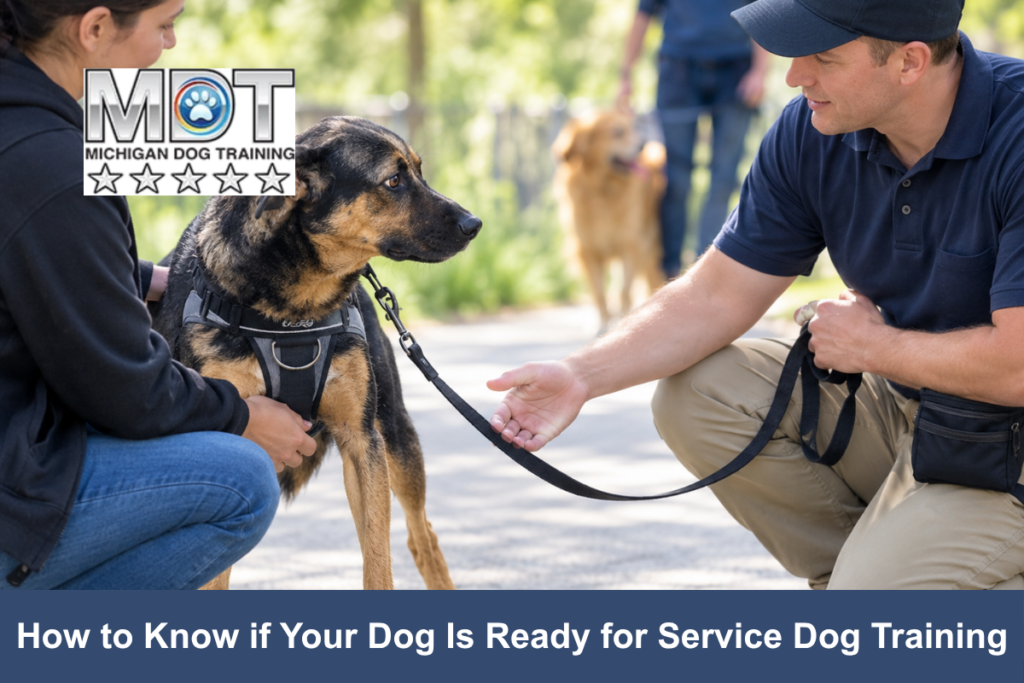
A dog may be ready for service dog training if they are healthy, confident, calm in different environments, and responsive to basic commands. They should also be friendly without being overly excitable, easily distracted, or aggressive toward people and other animals.
Introduction
Training a dog to become a service dog is a rewarding journey, but not every dog is naturally suited for the job. Service dog training requires patience, focus, confidence, good manners, and the ability to remain calm in different environments. Before starting formal training, it is important to understand whether your dog has the right temperament, behavior, health, and willingness to learn. Recognizing these qualities early can help you set realistic expectations and choose the right training approach. In this guide, we’ll explore the key signs that can help you determine whether your dog is ready for service dog training.
Start by Evaluating Your Dog’s Temperament
Temperament plays a major role in determining whether a dog is suitable for service work. A potential service dog should generally be calm, confident, attentive, and comfortable in different situations. Your dog does not need to be completely fearless, but extreme anxiety, persistent nervousness, excessive excitement, or defensive behavior can make public-access work difficult.
Pay attention to how your dog reacts to strangers, sudden sounds, unfamiliar places, crowds, elevators, vehicles, and other everyday experiences. A dog that notices something unusual and then quickly refocuses on you may have a strong foundation for future training. However, if your dog frequently panics, lunges, hides, or becomes overwhelmed, address these concerns before progressing to advanced service work.
Check Whether Your Dog Can Stay Focused Around Distractions
Service dogs encounter distractions almost everywhere. People may walk past, children may run nearby, another dog may bark, food may be on the floor, or a loud noise may suddenly occur. Your dog must learn to remain focused on its handler instead of reacting impulsively to everything around it. Try observing your dog during ordinary walks or visits to dog-friendly environments. Can your dog look at you when you call its name? Can it follow a simple cue while people or animals are nearby? Can it settle instead of constantly pulling, jumping, or investigating? These behaviors provide useful clues. Strong focus does not happen overnight, but a dog that naturally wants to work with its handler is often easier to develop through structured Service dog obedience training.
Make Sure Basic Obedience Skills Are Reliable
Before teaching specialized assistance tasks, make sure your dog has a strong obedience foundation. Your dog should respond consistently, even when distractions are present. Focus on:
- Sit, down, stay, and come
- Walking calmly on a leash
- Responding reliably to “leave it”
- Ignoring people, animals, and food
- Settling quietly in different environments
- Following cues without repeated commands
If your dog still pulls, jumps, ignores recall, or struggles to settle, strengthen these skills first. A qualified Service dog trainer can assess your dog’s obedience and recommend areas that need improvement before advanced training begins.
Look at Your Dog’s Social Behavior
Being friendly is helpful, but a service dog needs appropriate social behavior rather than constant social engagement. Your dog should be able to encounter strangers without demanding attention, jumping on people, barking excessively, or becoming overly excited. It should also behave appropriately around other dogs without attempting to play, chase, or interact with them while working. Ideally, your dog can calmly pass people and animals while keeping its attention on you. Socialization should also include exposure to different environments and situations. However, forcing a nervous dog into overwhelming situations can backfire. Instead, use gradual exposure and positive training techniques that help your dog develop confidence. This balanced approach can make future Professional service dog training more productive and less stressful.
Consider Your Dog’s Age, Health, and Physical Ability
Health should never be overlooked when evaluating a potential service dog. Service work can involve long periods of walking, standing, waiting, traveling, and performing repetitive tasks. Depending on the assistance tasks required, a dog may also need specific physical abilities. Before beginning intensive training, consider having your veterinarian evaluate your dog’s overall health, joints, mobility, vision, hearing, and other relevant factors. Age also matters. Puppies can begin learning foundational skills early, but advanced service work generally requires maturity, consistency, and emotional stability. Older dogs may have valuable obedience and life experience, but their physical capabilities should be carefully considered. Your dog’s health and intended tasks should ultimately guide the pace and intensity of training.
Watch How Your Dog Handles New Experiences
A service dog may encounter situations that are completely unfamiliar. It might ride an elevator, walk across different floor surfaces, enter a busy building, hear alarms, encounter mobility equipment, or travel through crowded areas. A dog that can investigate new experiences calmly and recover quickly after something surprising happens may be a promising candidate. You can gradually introduce your dog to different sights, sounds, surfaces, and environments while rewarding calm behavior. The goal isn’t to expose your dog to every possible situation at once. Instead, create controlled experiences that build confidence. If your dog consistently struggles with novelty, take a step back and work on confidence-building exercises before expecting it to handle demanding public environments.
Determine Whether Your Dog Enjoys Working With You
One of the most overlooked questions is whether your dog actually enjoys training. Service work requires repeated practice, patience, and cooperation between the dog and handler. A dog that eagerly engages with its handler, enjoys learning new behaviors, and remains motivated during training may have an advantage. Motivation can come from food, toys, praise, play, or simply the opportunity to interact with the handler. However, enthusiasm alone isn’t enough. A highly energetic dog may love training but still struggle with the calm behavior required in public. The ideal candidate can balance engagement with the ability to settle. During training sessions, watch whether your dog can learn, recover from mistakes, and continue working without becoming frustrated or excessively distracted.
Identify Any Behavioral Problems Before Advanced Training
Behavioral issues should not be ignored simply because your dog is intelligent or affectionate. Aggression, severe fear, excessive barking, destructive behavior, uncontrolled prey drive, reactivity, resource guarding, or extreme separation-related behaviors may interfere with service work. Address these issues before expecting your dog to perform complex tasks in public. A professional evaluation can help determine whether a behavior is manageable through training or represents a significant obstacle to service work. In some cases, a dog may be wonderful as a companion but simply not suited for the responsibilities of a working service dog. Recognizing that early is not a failure. It is a responsible decision that protects both the dog and the future handler.
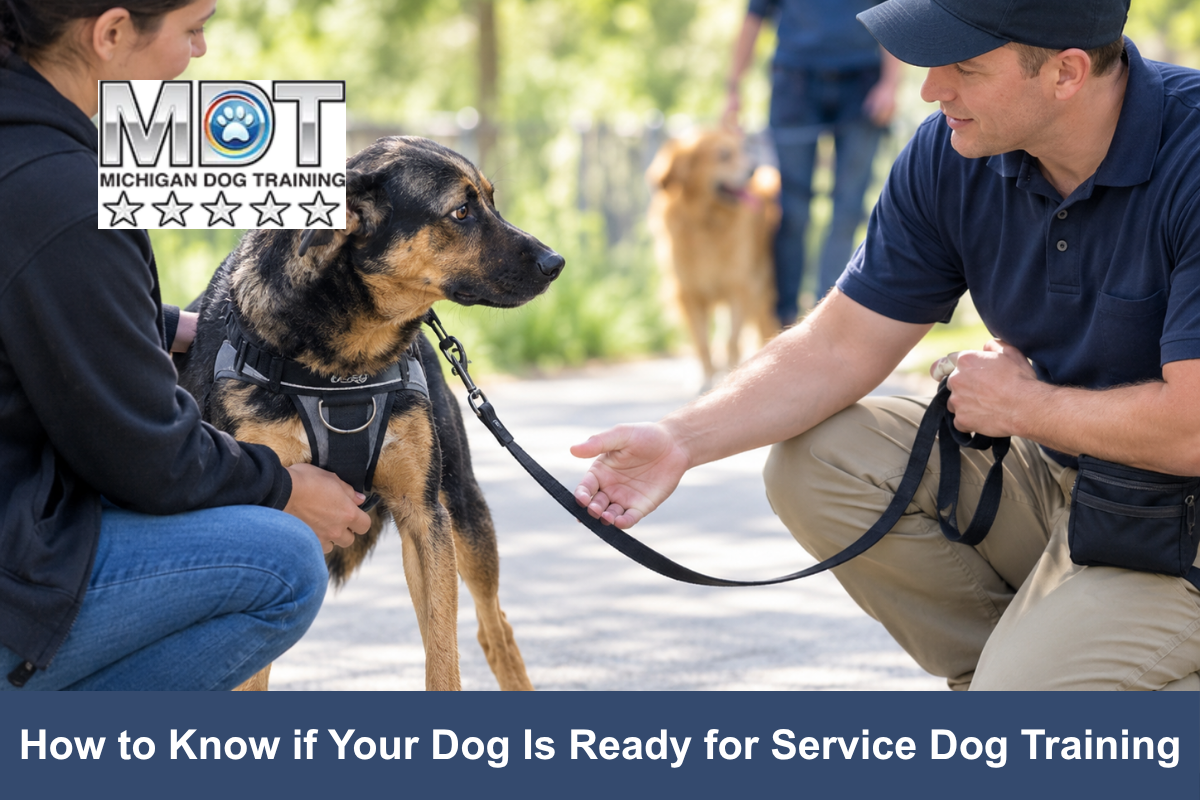
Test Your Dog’s Readiness With a Professional Evaluation
If you are unsure whether your dog is ready for service work, a professional evaluation can provide valuable insight. A qualified trainer can observe your dog in different situations and identify strengths, weaknesses, and areas that need improvement. During an evaluation, consider:
- Temperament: Is your dog calm, confident, and stable?
- Obedience: Does your dog respond reliably to basic commands?
- Social behavior: Can your dog behave appropriately around people and animals?
- Environmental confidence: Can your dog handle unfamiliar places and sounds?
- Motivation: Does your dog enjoy learning and working with you?
- Distractions: Can your dog maintain focus in busy environments?
This assessment can determine whether your dog is ready for advanced Service dog training, needs more foundational practice, or may be better suited to another type of training.
Build a Training Plan Based on Your Dog’s Individual Needs
Every dog learns differently, so create a training plan that matches your dog’s abilities and needs. Start with basic obedience, leash manners, and impulse control before introducing advanced tasks. Keep sessions short, positive, and consistent to maintain focus and motivation. As your dog improves, gradually add distractions and realistic environments. A structured Service dog training program can provide professional guidance, clear progression, and consistent practice, helping your dog develop the reliable skills needed for public access and specialized assistance work.
Don’t Rush Into Public Access
A dog that behaves well at home may react differently in public. Start training in calm environments, then gradually introduce distractions. Your dog should walk politely, ignore food and people, settle quietly, and respond reliably to commands. Avoid rushing this process. Consistent practice and dependable behavior are essential before allowing your dog to work in busy public environments.
Understand What Service Dog Certification Really Means
Many prospective handlers search for Service dog certification as part of the process, but it is important to understand that certification is not the same thing as making a dog suitable for service work. In the United States, service-dog rights and requirements are governed by applicable laws and regulations, and terminology around certification can be confusing. What matters most is whether the dog is appropriately trained to perform work or tasks related to a person’s disability and behaves appropriately in public. Avoid organizations or individuals promising instant certification as a shortcut to readiness. Instead, concentrate on temperament, task training, obedience, reliability, and responsible public behavior.
Ready to Take the Next Step? Start With the Right Training Foundation
If your dog demonstrates a stable temperament, reliable obedience, good social behavior, confidence in new environments, and a strong willingness to work, it may be ready to explore service-dog preparation. However, readiness is not determined by one characteristic or a single training test. It is the combination of physical health, emotional stability, trainability, obedience, focus, and appropriate public behavior that matters.
Conclusion
Knowing whether your dog is ready for service dog training requires more than good manners. Your dog should demonstrate confidence, focus, reliability, patience, and the ability to remain calm around people, animals, noises, and unfamiliar environments. Starting training at the right time can make the process more productive and enjoyable for both you and your dog. If you are unsure about your dog’s readiness, professional guidance can help you evaluate their temperament, behavior, and training needs. Michigan Dog Training can provide expert support to help build essential skills and prepare your dog for the demands of service dog training.
FAQs
Q: How old should a dog be before starting service dog training?
A: Dogs can begin foundational obedience and socialization while they are young. However, advanced service work requires maturity and reliable behavior. A professional trainer can help determine when your individual dog is ready to progress.
Q: Can any breed become a service dog?
A: Breed alone does not determine suitability. Temperament, health, trainability, size, energy level, task requirements, and behavior are all important considerations. Some individual dogs may be excellent candidates regardless of breed, while others may not be suited for service work.
Q: What is the most important quality in a service dog?
A: There is no single quality that guarantees success. However, a stable temperament, strong handler focus, reliable obedience, confidence, trainability, and appropriate public behavior are all especially important.
Q: Can an aggressive dog become a service dog?
A: Aggressive behavior is a serious concern for service work. A qualified professional should evaluate the underlying behavior and determine whether it can be safely and reliably addressed. A dog that presents a significant safety concern may not be appropriate for service work.
Q: Does my dog need perfect obedience before service training?
A: Your dog does not need to be perfect before starting a training journey, but it should have a solid foundation. Basic obedience, leash skills, impulse control, and the ability to focus are important building blocks for advanced service work.
Q: How long does service dog training take?
A: Training time varies significantly based on the dog’s age, temperament, previous experience, required tasks, and the handler’s consistency. Some dogs progress quickly, while others need considerably more time to develop reliable skills.
Q: Is Service dog certification required?
A: Certification terminology can be misleading. Instead of focusing solely on a certificate, handlers should focus on appropriate task training, reliable obedience, and suitable public behavior while understanding the laws that apply to service animals.
Q: Should I train my service dog myself or hire a professional?
A: Some handlers successfully train their own dogs, while others benefit from professional guidance. A qualified Service dog trainer can provide objective evaluations, structured lessons, troubleshooting, and help you prepare for increasingly difficult environments.