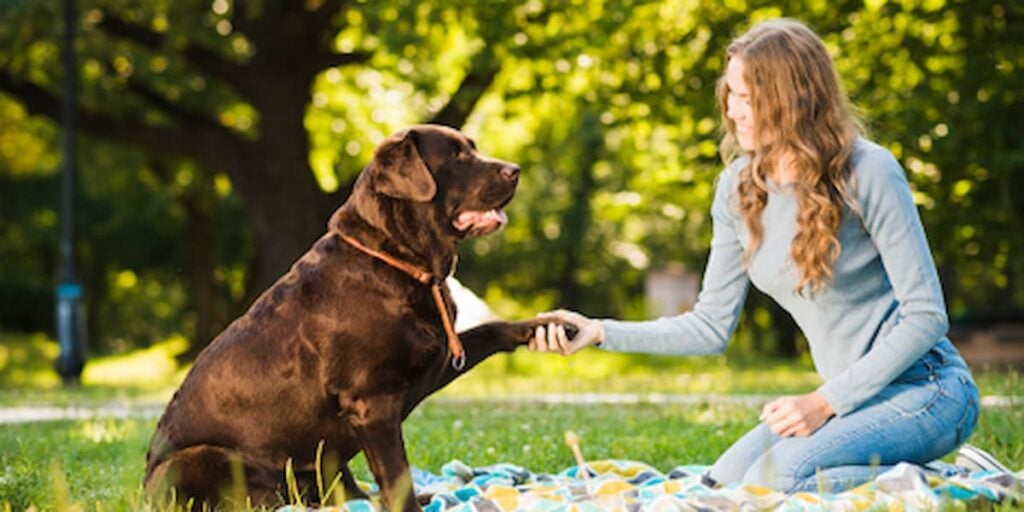
A dog’s training is often measured by what happens when a command is given. But the more meaningful test is what happens when the environment becomes unpredictable. Can the dog stay focused when another animal passes? Can it settle around unfamiliar people? Can it respond to its handler when a familiar routine changes? These are the situations where Michigan dog training becomes more than basic obedience and starts building practical behavior for everyday life.
For owners considering Michigan service dog training, this distinction is especially important. A service dog may need to perform specific tasks while maintaining appropriate behavior in public. That requires more than teaching commands in isolation. It calls for a structured progression that combines obedience, focus, task development, environmental exposure, and handler participation. When Dog Training Has to Work in Real Life
Why does real-world practice matter in dog training?
We believe training should prepare dogs for the environments they will actually experience. A quiet training room provides useful conditions for learning, but everyday life introduces distractions that can change how a dog responds.
A dog may understand a recall cue in a familiar yard but hesitate when another dog runs nearby. A puppy may sit calmly during a lesson but become excited when visitors enter the home. A service dog candidate may perform a task correctly in a controlled setting but need additional preparation before working around public distractions.
This is why we build skills progressively. We start with clear communication and foundational behaviors, then work toward greater reliability as the dog’s environment becomes more challenging.
What skills form the foundation of reliable behavior?
We focus on behaviors that give dogs and handlers a practical way to communicate. Depending on the dog’s needs, training can include basic obedience, attention, leash manners, recall, impulse control, appropriate greetings, settling, and responses around distractions.
These skills are connected rather than isolated. A reliable recall depends partly on the dog’s ability to disengage from something interesting. Calm walking requires impulse control and attention. Appropriate greetings require the dog to understand that not every person or animal needs an immediate response.
We also recognize that dogs do not all begin at the same point. Age, temperament, training history, behavior, and the owner’s goals influence which skills require the most attention.
How does specialized service dog training differ?
Service-dog preparation adds another layer because the dog is being trained to perform specific disability-related tasks while maintaining appropriate behavior.
Our Michigan service dog training programs include an eight-week Service Dog Board and Train option and a 20-lesson Train Your Own Service Dog program conducted over approximately five months. These formats provide different levels of handler involvement.
Depending on the handler’s needs, service dogs may be trained for areas such as mobility assistance, hearing alerts, diabetic alerts, or assistance related to PTSD, panic, or anxiety.
We treat task development as part of a larger training process. A task needs to have a practical purpose, and the dog must have the foundational skills necessary to perform it appropriately.
How does the handler influence training results?
We see the handler as part of the training process, not simply the person receiving the finished dog. Consistent cues, appropriate reinforcement, clear expectations, and regular practice help learned behaviors remain useful after formal training. A professional trainer can demonstrate techniques and develop the dog’s skills, but the handler must understand how to continue those behaviors in daily life.
Our training background includes pet-dog work, dog behavior, Police K9 work, Search and Rescue, and service-dog training. These areas provide different perspectives on obedience, behavior, environmental distractions, and working relationships between dogs and handlers.
What should owners consider before selecting a training program?
We recommend beginning with the actual behavior or working goal rather than choosing a program based only on convenience. Owners can consider:
- What behaviors does the dog already understand?
- Which situations create the greatest difficulty?
- Does the dog need group, private, in-home, day, or board and train instruction?
- Is specialized task training required?
- How much owner participation is appropriate?
- How will training continue outside formal sessions?
A needs assessment can help clarify these questions. It also creates an opportunity to discuss the dog’s history and determine which training format fits the situation.
How does training become part of everyday life?
The real objective of training is not simply completing a class or teaching a certain number of commands. We want learned behaviors to become useful when the dog and handler return to ordinary routines.
That can mean a dog walking more calmly through the neighborhood, responding to recall despite distractions, settling when guests arrive, or performing a trained service task appropriately. Each outcome depends on clear communication and continued reinforcement.
For anyone researching Michigan dog training, the broader lesson is that reliable behavior develops through practice, consistency, and appropriate progression. For individuals exploring Michigan service dog training, the process also involves careful evaluation, task development, public behavior, and handler education.
Michigan Dog Training provides group, private, in-home, day training, board and train, and specialized service-dog programs in Plymouth and Southeast Michigan. Its training structure gives owners different ways to address everyday obedience and more specialized working-dog goals while keeping the focus on practical skills that can carry beyond the training environment.
FAQs
- How early can a puppy begin basic training?
Puppies can begin age-appropriate training once they are ready to learn and engage.
- Why does my dog obey indoors but ignore commands outside?
Outdoor environments introduce distractions that can compete with familiar cues and learned behaviors.
- Can older dogs learn new obedience skills?
Yes, older dogs can learn through consistent practice, clear communication, and appropriate reinforcement.
- How long does service dog training usually take?
Training duration varies according to tasks, temperament, existing skills, and handler participation.
- Should owners practice training between professional sessions?
Yes, regular practice helps reinforce learned behaviors and supports greater consistency in everyday situations.