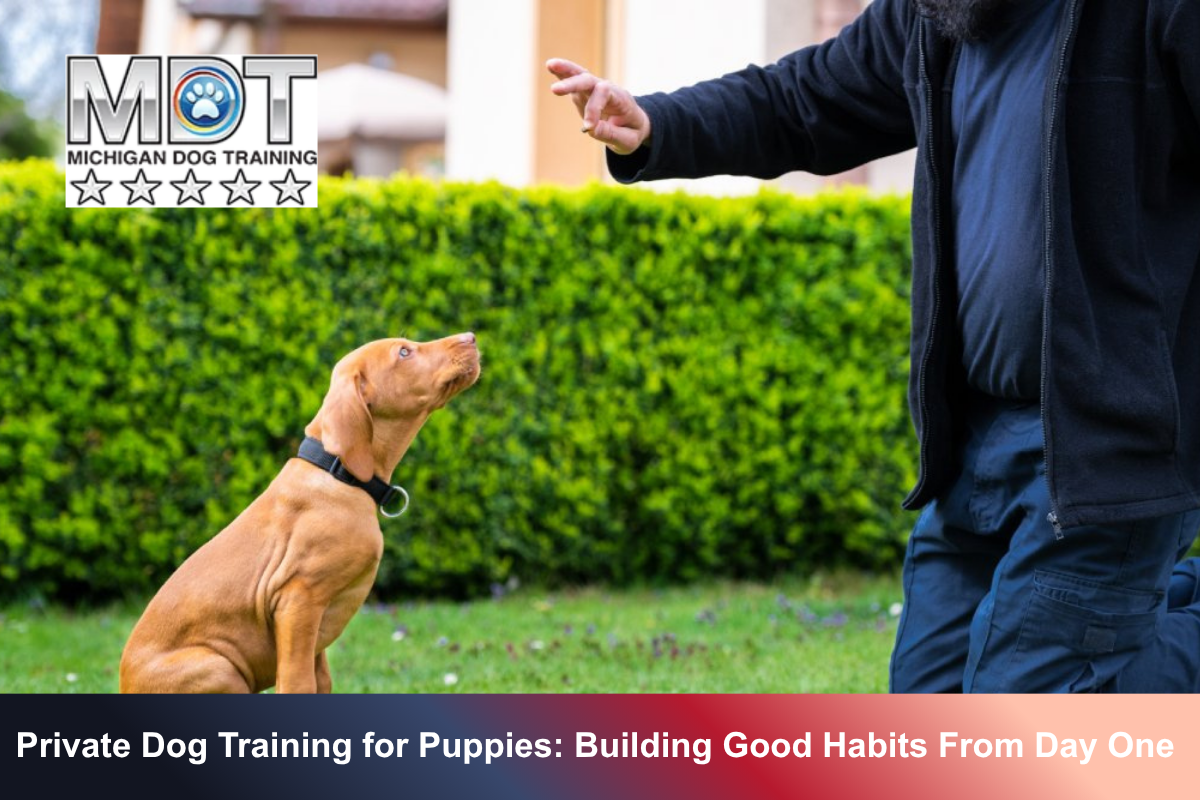
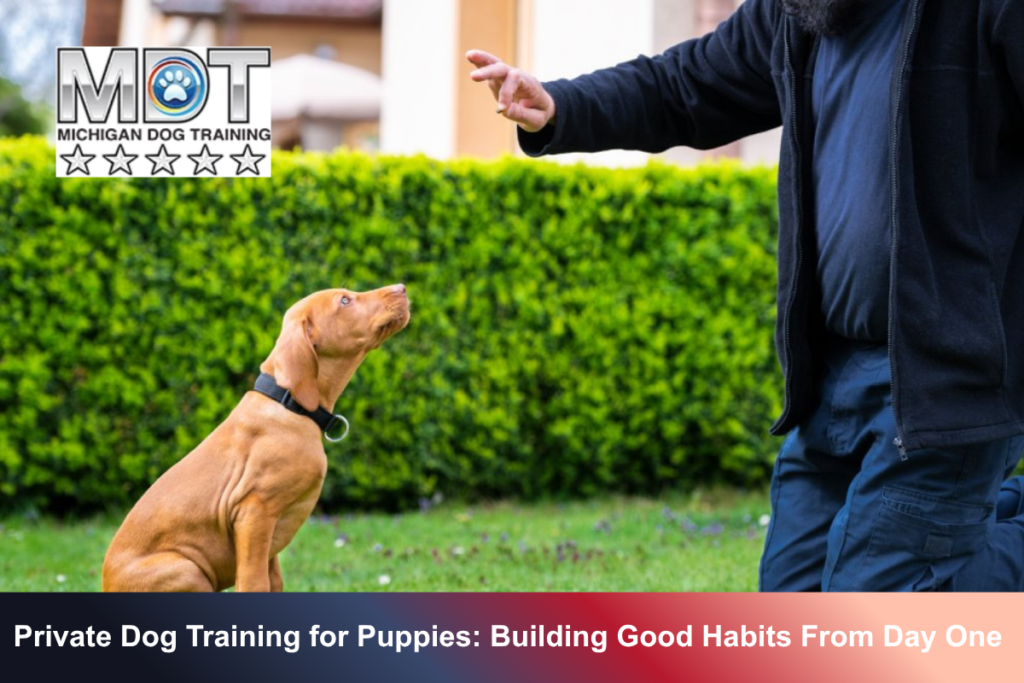
Private dog training for puppies helps establish good habits, confidence, and obedience from an early age. Personalized training focuses on potty training, basic commands, socialization, and reducing unwanted behaviors before they become long-term problems.
Introduction
Bringing home a new puppy is exciting, but it also comes with the responsibility of teaching good manners from the start. Puppies are naturally curious and eager to learn, making early training an ideal way to shape positive behaviors. Private dog training for puppies provides personalized guidance based on your puppy’s personality, learning style, and specific needs. Instead of using a one-size-fits-all approach, a private trainer can focus on essential skills such as potty training, basic commands, leash manners, socialization, and impulse control. With consistent practice and positive reinforcement, early training can build confidence, strengthen your bond, and help your puppy grow into a happy, well-behaved companion.
Start Early and Set Your Puppy Up for Success
Puppies are naturally curious learners. They constantly observe what happens around them and quickly discover which behaviors receive attention, rewards, or access to something they want. Because learning begins immediately, it is helpful to establish household expectations as soon as your puppy comes home.
Early training does not mean expecting a young puppy to behave like a fully trained adult dog. Instead, it means teaching simple habits gradually. For example, you can reward your puppy for sitting calmly, coming when called, chewing an appropriate toy, or waiting briefly before going through a doorway. These small lessons can become reliable behaviors over time.
A Professional dog trainer can also help you determine which expectations are realistic for your puppy’s age and development. Rather than overwhelming your puppy with too many commands, training can progress in short, positive sessions that encourage learning without creating unnecessary frustration.
Build Essential Skills Through Private Puppy Training
One major advantage of private training is the ability to concentrate on the skills your puppy actually needs. While group classes can introduce useful concepts, private sessions allow the trainer to devote attention specifically to your household, your puppy, and your concerns.
Basic obedience is an excellent starting point. Puppies can gradually learn commands and behaviors such as:
- Sit
- Stay
- Come
- Down
- Leave it
- Drop it
- Wait
- Walking politely on a leash
- Settling on a mat
- Responding to their name
These skills are not simply tricks. They can make everyday life safer and more manageable. For instance, a strong recall can help you call your puppy away from something potentially dangerous, while “leave it” can discourage your dog from picking up unsafe objects.
Private obedience training can also help puppies learn how to respond even when distractions are present. As your puppy becomes more reliable, the trainer can gradually introduce new environments, sounds, people, and situations.
Turn Potty Training Into a Consistent Routine
Potty training can be challenging, but a consistent routine makes the process easier. Take your puppy outside after waking, eating, drinking, playing, or sleeping. When they go in the right place, offer immediate praise and a suitable reward.
Watch for signs like sniffing, circling, or restlessness. If an accident happens, avoid punishment and clean the area thoroughly. A private trainer can also help identify problems and suggest practical changes to improve your puppy’s potty-training routine and progress.
Teach Bite Inhibition, Chewing, and Calm Behavior
Puppies naturally explore with their mouths, so biting and chewing are common behaviors. However, early training can teach them what is appropriate. Provide safe chew toys and gently redirect your puppy when they bite hands, clothing, or furniture. Rewarding appropriate chewing helps them understand which behaviors are acceptable.
Calm behavior is equally important. Puppies should learn that they do not always need to run, jump, bark, or play. Encourage quiet moments by rewarding your puppy when they settle calmly near you. Gradually, they can learn to relax while you work, eat, watch television, or welcome visitors.
Make Socialization a Positive Experience
Socialization helps puppies become confident and comfortable in different situations. Instead of overwhelming them, introduce new experiences gradually and make each interaction positive.
- Meet New People: Introduce your puppy to different people in calm, controlled settings.
- Explore New Places: Visit safe environments with different sights, sounds, and surfaces.
- Practice Everyday Sounds: Gradually expose your puppy to doorbells, vacuum cleaners, traffic, and household noises.
- Encourage Calm Greetings: Teach your puppy to remain calm when meeting people or other dogs.
- Respect Comfort Levels: Never force interactions if your puppy appears nervous.
- Seek Professional Guidance: A private trainer can create customized socialization exercises that build confidence and appropriate behavior.
Use Positive Reinforcement to Encourage Better Choices
Effective puppy training is largely about communication. Your puppy needs to understand which behaviors earn rewards and which choices do not lead to the desired outcome.
Positive reinforcement can include treats, praise, toys, play, attention, or access to something the puppy enjoys. For example, if your puppy sits instead of jumping on a visitor, rewarding that calm behavior tells the puppy that sitting is a useful choice.
Timing is important. Rewards should happen soon after the desired behavior, so your puppy can make the connection. Over time, you can gradually reduce the frequency of food rewards while continuing to reinforce good behavior in different ways.
A Private dog trainer can show you how to recognize and reward desirable behaviors in real-life situations. This hands-on coaching helps ensure that training continues even when the professional is not present.
Customize Training Around Your Puppy and Your Lifestyle
Every puppy learns differently, so training should reflect their age, temperament, energy level, breed traits, and home environment. Customized dog training focuses on the behaviors that matter most to your family rather than following a standard routine. For example, families with children may prioritize gentle play, calm greetings, and impulse control, while apartment owners may focus on quiet behavior, leash manners, and settling indoors. A personalized approach makes training more practical, enjoyable, and easier to maintain as your puppy grows.
Private sessions can also address specific challenges such as jumping, barking, chewing, leash pulling, poor recall, and difficulty settling. By practicing skills in realistic situations, your puppy learns how to behave appropriately in everyday life. This personalized guidance can also help owners build consistency and confidence.
Teach the Whole Family the Same Training Rules
Everyone in the household should follow the same rules so your puppy does not become confused. Consistent commands and expectations make learning easier and help build good habits.
A professional trainer can teach family members how to use commands, rewards, and redirection correctly. Children should also learn safe ways to interact with the puppy.
Remember, training involves the entire family, not just the dog. When everyone uses the same cues and rewards good behavior, your puppy can learn faster and become a confident, well-mannered companion.
Practice Short Lessons Instead of Long Training Sessions
Puppies have limited attention spans. Trying to train for too long can lead to boredom, frustration, or excessive excitement. Instead, keep sessions short and engaging.
You can incorporate training into ordinary activities throughout the day. Ask your puppy to sit before putting down the food bowl. Practice “wait” before opening a door. Reward calm behavior while you prepare dinner. Work on recall during safe play sessions.
These small moments add up. Your puppy begins to understand that training is not something that happens only during a formal lesson. It becomes part of everyday life.
Private training can help you create a realistic practice routine. A trainer can demonstrate exercises and show you how to repeat them between appointments without turning your entire day into a training session.
Manage Common Puppy Problems Before They Become Bigger Habits
Small puppy behaviors can become harder to manage as dogs grow. Addressing them early helps establish better habits and makes everyday life easier.
- Stop Jumping: Reward your puppy when all four paws stay on the floor.
- Reduce Leash Pulling: Encourage your puppy to walk beside you using rewards and consistent guidance.
- Prevent Stealing: Trade unwanted objects for safe toys instead of chasing your puppy.
- Manage Barking: Reward calm behavior and avoid reinforcing attention-seeking barking.
- Practice Recall: Regularly practice coming when called in safe, controlled areas.
A Professional dog trainer can identify why these behaviors occur and create a practical training plan. Early guidance helps prevent frustration, inconsistent corrections, and unwanted habits from becoming deeply established.
Build Confidence, Not Just Obedience
Good puppy training is about more than commands. A well-rounded puppy should learn how to navigate new experiences, recover from mild stress, communicate appropriately, and make good choices.
Confidence can be developed through manageable challenges. Allow your puppy to investigate new environments at a comfortable pace. Introduce new surfaces and sounds gradually. Reward curiosity and calm exploration.
Private training provides an opportunity to observe your puppy closely. A trainer can notice whether your puppy is becoming overwhelmed, overly excited, hesitant, or distracted and adjust the exercise accordingly. The result is a puppy that does not simply respond to commands but learns how to handle everyday situations with greater confidence.
Keep Training Going as Your Puppy Grows
Training should not stop once your puppy learns to sit, stay, or walk on a leash. As puppies mature, their environments and behaviors change. Adolescence can bring new challenges, including increased independence, excitement, and testing of boundaries.
Continue practicing previously learned skills while gradually increasing distractions. For example, once your puppy reliably comes when called inside the home, practice in a secure outdoor environment. Once leash walking is comfortable in a quiet area, gradually introduce busier surroundings.
Ongoing Private obedience training can provide valuable support during these developmental stages. Regular guidance can help reinforce good habits while addressing new behaviors before they become deeply established. Most importantly, keep training enjoyable. Dogs learn better when they are engaged, motivated, and able to succeed.
Get Personalized Help With Private Puppy Training
Starting puppy training early can save you considerable frustration later while helping your dog develop habits that last. However, you do not have to figure everything out alone. If you are struggling with potty training, biting, jumping, leash pulling, barking, recall, socialization, or general obedience, personalized professional support can make the process much easier.
Working with a Private dog trainer gives you the advantage of one-on-one attention and practical guidance tailored to your puppy. Instead of trying random techniques from different sources, you can develop a consistent approach based on your puppy’s needs and your household routine.
Final Thoughts
Starting private dog training early gives puppies the foundation they need to develop into confident, obedient, and well-mannered companions. From basic commands and potty training to leash manners and socialization, personalized instruction can address challenges before they become difficult habits. Consistency, patience, and positive reinforcement are key to lasting progress. If you want professional guidance tailored to your puppy’s unique needs, Michigan Dog Training can help you create a practical training plan and build better behaviors from day one. With the right support and regular practice at home, you can strengthen your bond with your puppy while setting the stage for a happier, more enjoyable life together.
FAQs
Q: When should I start private training for my puppy?
A: You can begin teaching appropriate habits as soon as your puppy comes home. Formal training should be age-appropriate and focus on simple behaviors, communication, socialization, and positive experiences. A trainer can help determine what your puppy is ready to learn.
Q: Is private training better than group puppy classes?
A: Neither option is automatically better for every puppy. Group classes can provide controlled exposure to other dogs and people, while private training offers individualized attention. Private sessions can be especially useful when you have specific household challenges or want training customized to your puppy.
Q: How often should I train my puppy?
A: Short, frequent practice sessions are generally more effective than lengthy sessions. Several brief training opportunities throughout the day can help your puppy learn without becoming overwhelmed.
Q: Can private training help with potty training?
A: Yes. A private trainer can review your puppy’s schedule, supervision routine, reward system, and household setup. They can also help identify inconsistencies that may be slowing progress.
Q: What should my puppy learn first?
A: Start with foundational behaviors such as responding to their name, coming when called, sitting, settling calmly, appropriate chewing, handling, potty habits, and walking politely. Safety and communication should take priority over complicated tricks.
Q: Can training stop my puppy from biting?
A: Training can help reduce inappropriate biting by teaching your puppy appropriate alternatives and reinforcing gentle behavior. Puppies naturally explore with their mouths, so providing suitable chew options and teaching redirection are important parts of the process.
Q: How long does puppy training take?
A: Training is an ongoing process rather than a fixed-length program. Some behaviors may improve quickly, while others require weeks or months of consistent practice. Your puppy’s age, temperament, environment, and the complexity of the behavior all affect progress.
Q: Why choose a professional dog trainer?
A: A professional can provide structured guidance, identify the reasons behind challenging behaviors, and show you how to apply training techniques correctly. Personalized instruction can also make training more practical for your specific household.