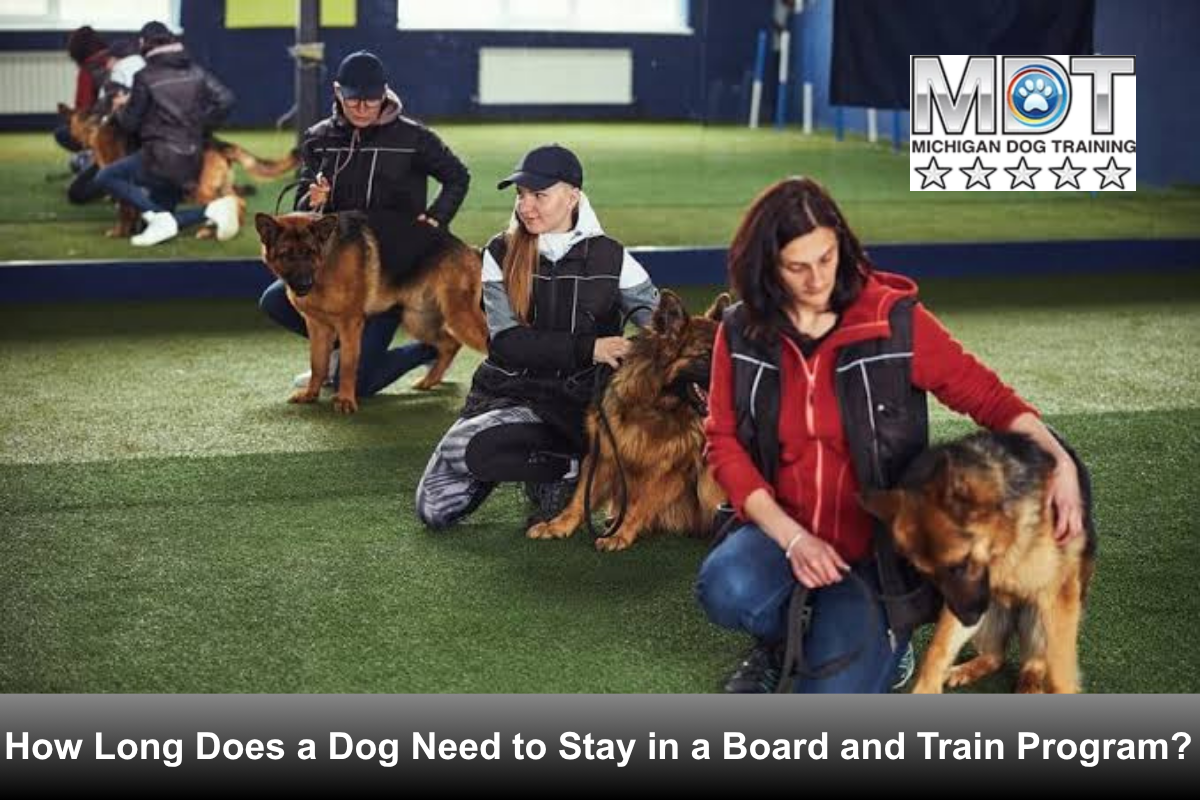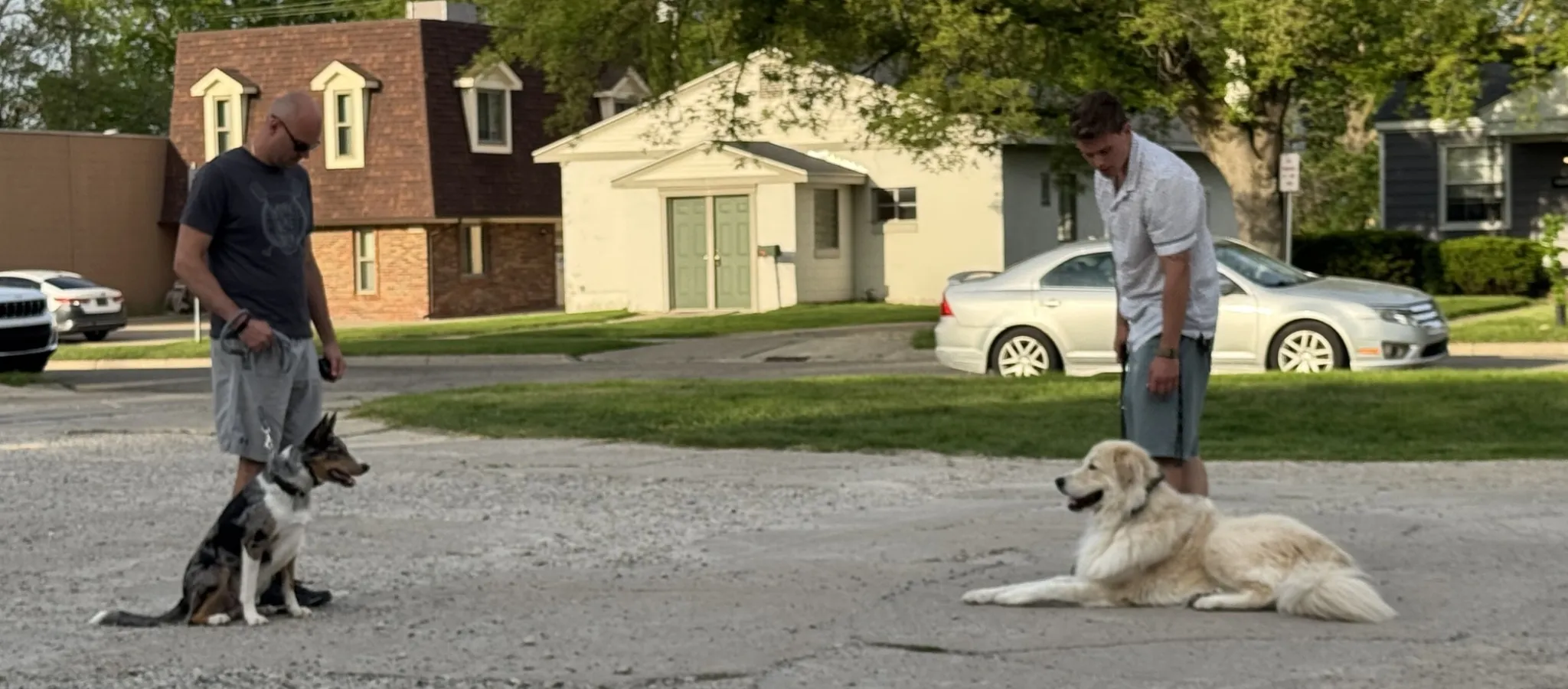
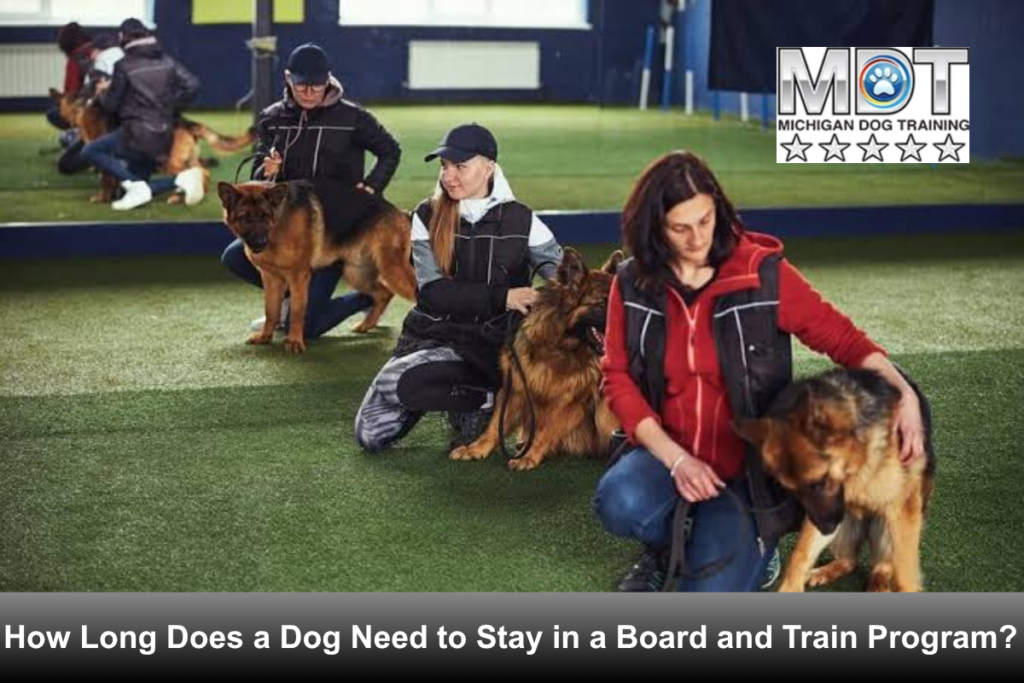
A dog typically stays in a board and train program for 1–4 weeks, depending on its age, temperament, training goals, and behavior challenges. Basic obedience may take less time, while complex behaviors often require a longer program and consistent follow-up training at home.
Introduction
Choosing the right length for a board-and-train program can make a big difference in your dog’s training progress. These programs provide dogs with structured routines, professional guidance, and plenty of opportunities to practice good behaviors. However, every dog learns at a different pace, so there is no one-size-fits-all answer. Some dogs may benefit from a short stay focused on basic obedience, while others need several weeks to address more challenging behaviors. Factors such as age, temperament, training goals, and behavior issues all influence the ideal program length. Understanding these factors can help you choose a board and train program that fits your dog’s specific needs.
How Long Do Most Board and Train Programs Last?
For many dogs, a two- to five-week stay provides enough time to establish foundational obedience and work on common behavior concerns. Shorter programs may concentrate on basic manners, leash skills, place commands, recall, impulse control, and household routines. Longer programs can provide additional time for practicing those behaviors around distractions and addressing more challenging habits.
However, you should not choose a program simply because it advertises a certain number of weeks. A three-week stay is not automatically better than a two-week stay, and a six-week stay does not guarantee a perfectly trained dog. Instead, look at what the trainer plans to accomplish during that time. Reputable Dog training programs should have clear goals, regular progress evaluations, and a transition plan for when your dog returns home.
What Happens During the First Few Days?
The first few days are often about adjustment rather than intensive training. Your dog may be entering an unfamiliar home, facility, routine, or social environment. Even confident dogs need time to understand where they are, meet their trainer, settle into a schedule, and become comfortable enough to learn effectively. Stress can interfere with learning, so rushing this stage can be counterproductive.
Once your dog becomes comfortable, the trainer can begin building a customized routine. This may include obedience exercises, structured walks, enrichment, play, rest periods, and controlled exposure to different environments. Therefore, when you compare board-and-train programs, remember that not every day is simply another day of drilling commands. Adjustment, rest, relationship-building, and environmental exposure are also important parts of productive training.
Does Your Dog Need Two, Three, or More Weeks?
A shorter stay may work well when your dog already has a good foundation and you mainly want to improve manners or obedience. For example, a dog that understands basic commands but pulls on the leash, jumps on visitors, or struggles with impulse control may benefit from an intensive training period followed by consistent practice at home.
A three- to five-week program can provide more time for repetition and proofing. This becomes particularly useful when a dog needs to practice around people, other dogs, public spaces, new sounds, or other distractions. Some trainers specifically recommend longer stays because the extra time allows them to work through the initial adjustment period and then practice skills in increasingly challenging situations.
A general guide:
- About 1–2 weeks: Basic manners, introductory obedience, and focused training goals.
- About 2–3 weeks: Foundation obedience, leash skills, impulse control, and household manners.
- About 3–5 weeks: More extensive obedience, distraction training, and behavior modification.
- 5+ weeks: More complex cases or highly individualized training goals may require additional time.
These are general ranges, not guarantees. Your dog’s individual assessment should determine the appropriate timeline.
Which Factors Determine Your Dog’s Training Timeline?
Several factors influence how long your dog should stay in a dog board-and-train program. Age is one consideration, but it is certainly not the only one. A young dog may learn quickly but still lack maturity and impulse control, while an adult dog may have years of established habits that take longer to change.
Your dog’s previous training experience also matters. A dog that already understands basic obedience may progress faster than a dog starting from scratch. Likewise, temperament plays a role. Confident dogs may adapt quickly, while nervous or fearful dogs may need additional time to develop trust and feel comfortable enough to learn.
Other important factors include:
- The complexity of the training goals
- Your dog’s previous training history
- Age and developmental stage
- Temperament and confidence
- Reactivity toward people or dogs
- Anxiety or fear
- Leash behavior
- Recall reliability
- Impulse control
- The dog’s ability to generalize behaviors
- Your home environment
- Your commitment to follow-up training
Ultimately, the best trainer will assess the dog rather than sell you a predetermined number of weeks.
Why Longer Training Isn’t Always Better
It can be tempting to assume that keeping your dog away for the longest possible program will automatically produce better results. That is not necessarily true. Training quality matters just as much as duration. A well-designed three-week program can be more productive than a poorly structured six-week stay.
Dogs also need appropriate rest, enrichment, and recovery time. Effective training isn’t about keeping a dog mentally engaged every minute of the day. Instead, a balanced routine combines focused training with exercise, play, rest, and appropriate social experiences. Reputable board and train providers should be able to explain how they structure a dog’s entire day.
Additionally, behavior change does not end when the boarding period ends. Your dog may perform beautifully for a trainer and still need guidance when returning to your home. That is why Board and train dog training should be viewed as a foundation rather than a magic reset button.
What About Dogs With Behavioral Problems?
Dogs dealing with reactivity, fear, anxiety, resource guarding, or aggressive behavior may require a different approach from dogs learning basic obedience. These cases can take longer because the trainer must consider the dog’s emotional responses, safety, triggers, and ability to remain comfortable while learning.
For example, a reactive dog may need gradual exposure to triggers while learning alternative behaviors. Simply keeping the dog around distractions for longer periods does not automatically solve the underlying problem. In some cases, extending the stay may provide more opportunities for controlled practice, but significant follow-up work at home will still be necessary. Behavior professionals also emphasize that aggression should be managed carefully rather than treated as something that can simply be “cured” during one boarding stay.
If your dog has a history of serious aggression, extreme fear, or other high-risk behavior, ask prospective trainers exactly how they assess and manage those cases. Safety should always come before speed.
Puppies May Need a Different Training Strategy
Puppies can benefit from structured training, but their needs are different from those of adult dogs. Young puppies have developing attention spans and are still learning about the world. Their programs should include appropriate socialization, confidence-building experiences, basic manners, handling, and age-appropriate exposure.
It is also important to maintain realistic expectations. For instance, a puppy may learn a bathroom routine while staying with a trainer, but house training can still require substantial work after returning home because the puppy must learn the expectations of its own household.
Instead of asking only, “How many weeks should my puppy stay?” ask, “What experiences and skills will my puppy receive during those weeks?” A thoughtful program should support healthy development rather than simply rush through a list of commands.
The Trainer Matters as Much as the Timeline
When comparing Dog training services, don’t make duration your only deciding factor. Ask who will work with your dog, where your dog will stay, how many dogs are enrolled, how much individual attention each dog receives, and what happens outside formal training sessions.
You should also ask about training methods, daily exercise, enrichment, rest, communication, emergency procedures, vaccinations, and supervision. A reputable provider should be comfortable answering these questions and explaining what your dog’s daily routine will look like. Touring the facility or trainer’s environment when possible can also help you evaluate cleanliness, safety, organization, and overall care.
Before enrolling, consider asking:
- How long do you recommend for my dog’s specific goals?
- What skills will you work on?
- How will you measure progress?
- How often will I receive updates?
- Will I receive photos or videos?
- How much exercise and enrichment will my dog receive?
- Where will my dog sleep?
- What training methods do you use?
- Will I receive owner-training lessons?
- What happens if my dog needs more time?
- What follow-up support is included?
The answers can tell you much more than a simple promise of “fast results.”
Owner Training Can Make or Break the Results
One of the most overlooked parts of a board and train program is owner education. Your dog may spend several weeks practicing with a professional, but you will be the person living with the dog every day. Therefore, you need to understand the cues, routines, rewards, boundaries, and management strategies used during training.
A strong program should teach you how to continue the work at home. Some trainers provide lessons before pickup, while others include follow-up sessions after your dog returns. Owner involvement is essential because dogs can behave differently in different environments and with different handlers.
Think of the board and train stay as an intensive learning period—not the finish line. Consistent practice after graduation helps your dog’s new behaviors become reliable parts of everyday life.
What Should Your Dog Learn Before Coming Home?
Before your dog completes the program, the trainer should ideally assess whether the learned behaviors work outside the training environment. A dog that responds perfectly in a quiet room may struggle when a squirrel runs by, a guest enters the house, or another dog walks past.
This is where proofing becomes important. The trainer can gradually introduce different locations, distractions, people, surfaces, sounds, and situations. The goal isn’t to make your dog perfect in every environment overnight. Instead, the goal is to build skills that can transfer into real-life situations.
For example, if leash walking is a training goal, your dog should ideally practice more than walking calmly around the training facility. Appropriate practice might eventually include quiet neighborhoods, busier sidewalks, parks, or other controlled environments.
Prepare for a Successful Homecoming
Your dog’s return home can be just as important as the boarding period itself. The first few days should allow you to understand the new routines without overwhelming your dog with every possible distraction at once.
Ask your trainer for clear instructions about feeding, exercise, training sessions, equipment, household rules, and handling. Then keep the routine consistent. If your trainer taught your dog to wait calmly before going through doors, for example, continue practicing that behavior at home instead of allowing old habits to immediately return.
The goal is consistency without expecting perfection. Your dog may need time to adjust from the training environment back to normal family life. Be patient, follow the trainer’s recommendations, and contact them if you encounter problems.
Could a K9 Camp or Board and Train Program Be Right for Your Dog?
For owners looking for an immersive training experience, a structured K9 camp can combine boarding, daily training, exercise, and routine in one setting. The specific approach varies between providers, so it is important to investigate exactly what the program includes before making a decision.
Whether you choose a K9 camp, private lessons, day training, or another option, focus on your dog’s individual needs. The best solution is the one that provides safe, appropriate training and gives you the tools to continue that progress.
Final Thoughts
In conclusion, the right length of a board and train program depends on your dog’s age, behavior, training goals, and individual needs. Some dogs may benefit from a one- to two-week stay, while more complex behavioral challenges can require several weeks of structured training. However, continued practice at home is essential for maintaining progress after your dog returns. Choosing an experienced training provider can make the process smoother and more effective. If you’re looking for professional guidance, Michigan Dog Training can help create a structured approach to support your dog’s obedience, confidence, and long-term behavior.
FAQs
Q: How long does a typical board and train program last?
A: Many programs last approximately two to five weeks, although the appropriate duration depends on the dog’s goals, behavior, temperament, and previous training. Some basic programs may be shorter, while more complex cases may require additional time.
Q: Is two weeks long enough to train a dog?
A: Two weeks can be enough to establish or improve foundational skills for some dogs. However, it may not be enough time to resolve complicated behavioral issues or make new behaviors reliable in many different environments.
Q: Is a four-week board and train program better than a two-week program?
A: Not automatically. A longer stay provides more time for adjustment, repetition, distraction training, and behavior work, but the quality and structure of the program matter more than the number of weeks alone.
Q: Can board and train fix aggression?
A: A board and train program can help establish management skills and alternative behaviors, but serious aggression requires careful, individualized behavior work. Owners should expect ongoing management and follow-up rather than a guaranteed “cure.”
Q: Will my dog forget the training after coming home?
A: Dogs can struggle when moving from a trainer’s environment back into their normal routine. Consistent owner participation, clear household rules, regular practice, and follow-up support can help maintain the progress.
Q: Should puppies attend board and train programs?
A: They can, provided the program is age-appropriate and emphasizes positive experiences, appropriate socialization, basic manners, and healthy development. Puppy owners should still expect to continue training at home.
Q: What should I do after my dog finishes board and train?
A: Continue practicing the skills your dog learned, follow your trainer’s instructions, and use any included follow-up lessons. Start in manageable environments before gradually increasing distractions.
Q: How do I know if my dog needs a longer stay?
A: Ask the trainer to evaluate your dog’s progress rather than simply choosing an arbitrary extension. If your dog needs additional time to adjust, develop reliability, work around distractions, or address more complex behaviors, a longer program may be appropriate.