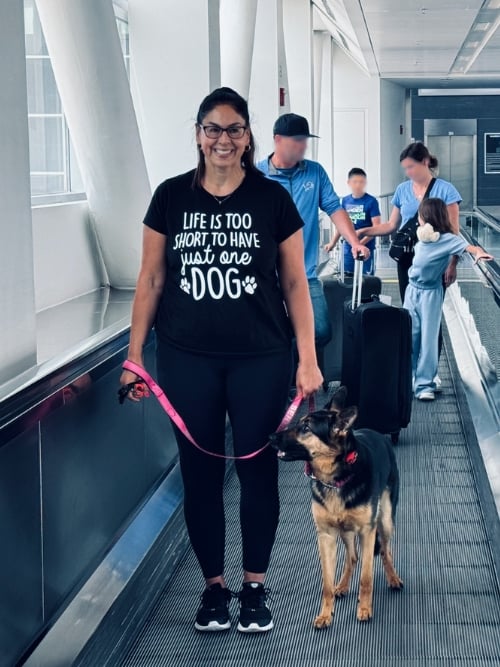
How to Evaluate and Select the Right Service Dog
Choosing the ideal service dog is a pivotal decision that shapes daily independence, safety, and quality of life for individuals with disabilities. A thorough service dog training assessment ensures you pair with a canine partner capable of reliable task performance, public access manners, and long-term health.
This comprehensive guide will walk you through every aspect of service dog training, from understanding legal definitions to evaluating candidates and navigating the training process. You’ll discover how to apply essential evaluation criteria and leverage professional programs to find your perfect canine partner.
What Is a Service Dog and How Does It Differ from Emotional Support and Therapy Dogs?
A service dog is a dog individually trained to perform specific tasks that mitigate an individual’s disability, providing practical assistance that extends beyond companionship. This specialized role elevates access, independence, and safety because tasks such as mobility support, medical alerting, and psychiatric interruption directly address functional needs.
What Defines a Service Dog Under the ADA?
Under the Americans with Disabilities Act (ADA), a service dog training is specifically defined as a dog individually trained to perform work or tasks for a person with a disability. This precise definition carries significant legal weight and determines your rights in public spaces.
Key aspects of the ADA definition include:
- Task Focus: The dog must perform specific disability-related tasks (such as seizure response or mobility assistance)
- Public Access Rights: Service dogs are permitted in most public places without additional documentation
- No Certification Required: Formal certification is voluntary and not mandated by federal law
This legal framework guarantees handlers protected public access and clarifies that a service dog’s primary role is measurable task performance rather than emotional comfort alone.
U.S. Department of Justice, Civil Rights Division, Disability Rights Section, ADA Requirements: Service Animals (2010)
What Key Tasks Do Service Dogs Perform for Disabilities?
Service dogs execute a range of specialized tasks that directly improve daily functioning:
- Mobility assistance (brace and balance support)
- Medical alerts (detecting seizures, blood sugar changes)
- Psychiatric support (interrupting anxiety or grounding during PTSD episodes)
- Guide work (navigating obstacles for visually impaired handlers)
- Hearing alerts (signaling important sounds for hearing-impaired individuals)
Task proficiency builds on early suitability assessment to ensure reliability in real-world situations.
Differences from Emotional Support and Therapy Dogs
While often confused, service dogs, emotional support animals, and therapy dogs serve distinctly different purposes with varying legal protections:
Service Dogs are trained to perform specific tasks for a person with a disability and enjoy full ADA access in public places. Emotional Support Dogs provide comfort through their presence without specialized task training and have no guaranteed public access beyond housing accommodations. While, Therapy Dogs volunteer in therapeutic settings to provide emotional support but have access limited to authorized facilities only. For more information on training, consider our service dog training.
Understanding these distinctions helps clarify your specific needs and the type of training investment required for your situation.
| Animal Type | Definition | Public Access Rights |
|---|---|---|
| Service Dog | Trained to perform specific tasks for a person with a disability | Full ADA access in public places |
| Emotional Support Dog | Provides comfort through its presence without task training | No guaranteed public access beyond housing |
| Therapy Dog | Volunteers in therapeutic settings to provide emotional support | Access limited to authorized facilities |
Emotional support and therapy dogs enhance well-being but lack task training and ADA public access protections that service dogs possess.
What Are the Essential Criteria for Evaluating a Service Dog Candidate?

Selecting a service dog candidate requires a comprehensive assessment that goes far beyond basic obedience or appearance. The evaluation process focuses on three critical areas that predict long-term success and reliability in service work.
Temperament as the Foundation of Success
Temperament serves as the cornerstone of service dog suitability because it determines how a dog responds to people, environments, and stressors. A stable, confident dog remains focused amid distractions and learns complex tasks consistently, reducing risk during public outings and critical task performance.
Key temperament traits that indicate strong service dog training potential include:
- Calmness in busy or noisy environments without becoming overwhelmed or reactive
- Confidence around strangers, animals, and novel situations without fear or aggression
- Focus on the handler while avoiding reactive behavior toward distractions
- Resilience to sudden noises, commotion, or unexpected events
- Low fear response and minimal aggressive tendencies in challenging situations
- Professional temperament evaluations like the Canine Assessment and Research Temperament Test (CARAT) provide objective measurements of these traits through standardized testing protocols.
American Veterinary Medical Association, Guidelines for Responsible Dog Ownership (2023)
Health and Physical Requirements
Comprehensive health screenings verify that a candidate possesses the physical capability and longevity necessary for years of reliable service work. Essential health evaluations include:
- Hip and elbow evaluations through organizations like the Orthopedic Foundation for Animals (OFA)
- Ophthalmologic examinations to screen for hereditary vision disorders
- Cardiac assessments including auscultation and ECG for heart health
- General orthopedic and neurologic evaluations to ensure sound movement and function
Physical attributes such as size, strength, and gait must align with intended tasks. For example, mobility support dogs require sufficient size and bone structure to provide safe bracing assistance.
Which Common Health Issues Disqualify a Service Dog Candidate?
- Hip dysplasia or severe arthritis
- Progressive eye diseases (e.g., PRA)
- Cardiac anomalies compromising stamina
- Chronic respiratory or neurological disorders
Identifying disqualifiers early guides candidate selection toward sound dogs capable of sustained work.
How Do You Choose Between a Puppy or Adult Dog for Service Work?
The decision between starting with a puppy or selecting an adult dog significantly impacts your training timeline, bonding experience, and immediate service needs. Each option offers distinct advantages and challenges that must align with your specific circumstances.
What Are the Advantages and Disadvantages of Starting with a Puppy?
Raising a puppy offers:
- Advantage: Moldable temperament from an early age
- Advantage: Long-term bonding and socialization control
- Disadvantage: Extended basic obedience period before task work
- Disadvantage: Uncertain adult temperament outcomes
Early assessment tools like the Volhard Puppy Aptitude Test help predict future suitability.
When Is an Adult Dog a Better Service Dog Candidate?
Adult dogs may be ideal when they already demonstrate:
- Established temperament stability
- Completed basic obedience or prior training
- Immediate capability for task-specific work
- Shorter timeline to public access certification
Rescues and program graduates often offer a balance of proven temperament and foundational skills.
How Do Breeders, Rescues, and Service Dog Programs Differ as Sources?
- Breeders: Emphasize genetics and lineage, with predictable health and temperament lines.
- Rescues: Offer dogs with unknown backgrounds but potential based on thorough temperament testing.
- Service Dog Programs: Provide program-vetted dogs with preliminary task training but at higher cost.
Each source demands its own suitability assessment process.
Why Is Professional Evaluation Important in Selecting a Service Dog?
Expert assessors apply standardized tests, interpret health screenings, and anticipate training trajectories. Their insights minimize investment risk by matching handler needs with a dog’s unique profile, improving training outcomes and long-term success.
How Does Michigan Dog Training Support Service Dog Selection and Training?
Michigan Dog Training (MDT) combines local expertise with comprehensive programs designed to guide handlers through every stage of evaluation and training. Their approach emphasizes individualized assessment and tailored training solutions.
Comprehensive Training Program Options
MDT offers structured programs that accommodate different learning preferences and schedules:
- 8-Week Board and Train Program provides intensive residential training covering everything from basic obedience to advanced task work. This immersive approach allows for consistent, professional instruction while handlers learn alongside their dogs.
- 20-Lesson Train-Your-Own Service Dog Program offers a hands-on curriculum for owners who prefer direct involvement in the training process. This option provides professional guidance while maintaining the handler-dog bond throughout training.
Both programs integrate public access obedience with specific disability-mitigating tasks to ensure complete readiness for real-world service work.
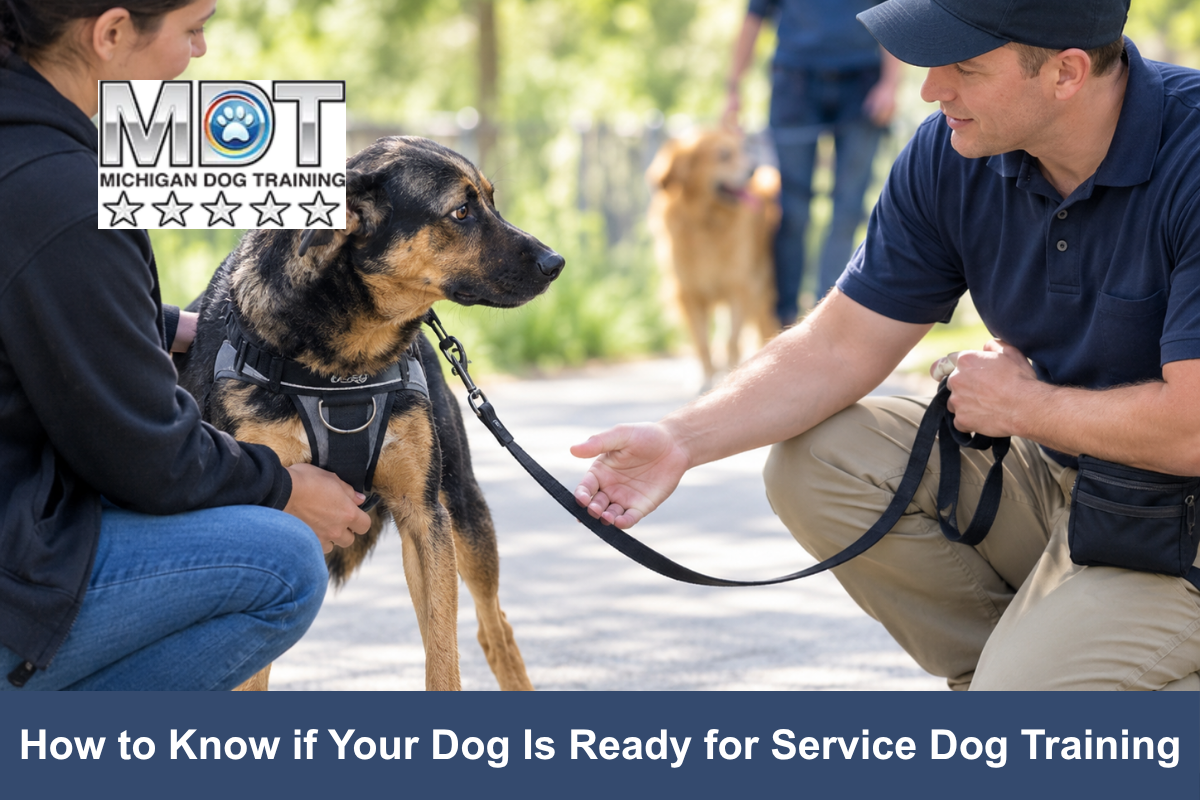
How Does MDT Evaluate and Tailor Training for Service Dog Candidates?
Every MDT candidate undergoes:
- Comprehensive temperament screening (CARAT and custom assessments)
- Health and physical evaluations in partnership with veterinary specialists
- Customized lesson plans that align tasks, handler goals, and training milestones
This tailored process maximizes each dog’s strengths and addresses areas for improvement.
How Can You Enroll in MDT’s Service Dog Training Programs?
To begin your service dog suitability assessment and training pathway, contact Michigan Dog Training via our website or phone for a preliminary consultation. Early evaluation secures your spot in an upcoming session and initiates the partnership-building process.
What Are the Best Dog Breeds for Service Work and Why?
While individual temperament matters more than breed, certain breeds consistently demonstrate characteristics that make them particularly well-suited for service work. Understanding breed tendencies helps inform your selection process.
Which Breeds Are Most Commonly Used as Service Dogs?
| Breed | Temperament Trait | Key Benefit |
|---|---|---|
| Labrador Retriever | High trainability | Reliable task learning |
| Golden Retriever | Steady confidence | Calm in varied environments |
| Poodle | Hypoallergenic coat | Suitable for allergy-sensitive handlers |
| German Shepherd | Strong drive | Excellent for mobility and guide work |
| Boxer | Energetic resilience | Ideal for psychiatric interruption |
Matching Breed Traits to Handler Needs
Breed-specific characteristics such as size for mobility tasks, coat type for allergy considerations, and natural work drive significantly influence daily performance and handler comfort. Matching a breed’s inherent traits with specific handler needs accelerates training and strengthens the long-term partnership.
What Breeds Are Best for Psychiatric and Mobility Service Dogs?
- Psychiatric Service Dogs: Poodles and Labradors often excel due to their calm focus and emotional sensitivity.
- Mobility Assistance Dogs: German Shepherds and Golden Retrievers provide the size and strength necessary for braces and balance support.
Selecting the right breed customizes the service dog suitability assessment to specific disability requirements.
Why Should You Invest in Professional Service Dog Selection and Training?
Selecting and training a service dog represents a significant investment in independence, safety, and quality of life. Professional guidance throughout this process ensures the best possible outcomes while minimizing risks and setbacks.
The Value of Expert Assessment
Professional evaluators apply standardized testing protocols, interpret health screenings accurately, and anticipate training trajectories based on extensive experience. Their insights help match handler needs with suitable candidates while identifying potential challenges before they become problems.
Long-Term Partnership Success
By applying rigorous service dog suitability assessment criteria—from temperament evaluation to health screening and breed compatibility—you establish the foundation for a reliable, life-enhancing partnership that can serve you for many years.
Ready to begin your journey toward independence with a dedicated canine partner? Michigan Dog Training‘s experienced evaluators and tailored programs stand ready to support you through every step of the selection and training process. Contact us today to schedule your initial consultation and take the first step toward finding your perfect service dog match.