How to Prepare Handlers and Dogs for Successful Public Access
Navigating Michigan’s bustling streets, dining establishments, and community venues with a service dog requires thorough public access training for both handlers and their canine partners. Proper preparation ensures safety, legal adherence, and confidence in public settings.
This guide explores the core elements of public access preparation—from essential obedience skills and advanced task training to ADA awareness, test readiness, handler confidence, and program evaluation. You’ll learn:
- Why public access training is a cornerstone of ADA compliance
- Key obedience foundations and advanced behaviors for real-world success
- Practical strategies for mastering the Public Access Test (PAT)
- Handler roles in stress management, advocacy, and community interaction
- Tailored training approaches for psychiatric, mobility, and medical alert dogs
- How to identify a credible program, such as Michigan Dog Training
By working through these areas, service dog teams can build the resilience and reliability needed to thrive in Michigan and beyond.
What is Service Dog Public Access Training and Why is it Crucial?
Public access training is a structured process that equips service dogs and their handlers with the skills to navigate public settings safely and effectively. It includes teaching proper behavior, performing specific tasks, managing distractions, and understanding legal rights. For example, a mobility assistance dog may need to maintain a steady heel beside a wheelchair while moving through a crowded area.
The benefits of this training extend beyond legal compliance. It enhances safety, reduces stress, and fosters independence. Public access training forms the bridge between basic obedience and real-world reliability, making it essential for every service dog team. According to the American Veterinary Society of Animal Behavior, consistent exposure and structured socialization are vital for building reliable canine behavior.
(AVSAB, Puppy Socialization Position Statement, 2019).
What Does Public Access Training Entail for Service Dogs and Handlers?
Public access training is built upon four key components, each reinforcing the next to prepare both handler and dog for real-world challenges.
Core Elements of Public Access Training
- Obedience Proofing: Reinforcing commands such as sit, stay, heel, and come in stimulating environments.
- Task Accuracy: Practicing mobility support, medical alerts, and retrieval tasks in realistic public settings.
- Distraction Desensitization: Controlled exposure to sounds, movements, and unpredictable interactions.
- Handler Education: Teaching legal rights, etiquette, recognition of stress signals, and effective advocacy.
Together, these elements create calm, focused, and dependable service dog training teams who can meet the expectations of public life.
Public Access Training Support ADA Compliance
ADA compliance depends heavily on a service dog’s behavior and control in public. To meet legal standards, dogs must remain calm, unobtrusive, and focused. Unrestricted access to public accommodations.
- Handler accountability for managing the dog’s behavior.
- Ensuring no disruption to normal business operations.
Proper training aligns team practices with the ADA’s definition of “reasonable accommodation,” thereby mitigating legal challenges and upholding civil rights in public spaces.
What Public Access Skills and Behaviors Should Service Dogs Master?
Service dogs must progress from basic obedience to more advanced behaviors in order to remain reliable across public environments. A structured approach ensures dogs build confidence step by step while handlers gain the control needed for everyday outings.
Essential Skills for Public Environments
- Loose-Leash Walking: Remaining beside the handler without pulling.
- Down-Stay Under Distraction: Remaining calm and stationary in busy environments.
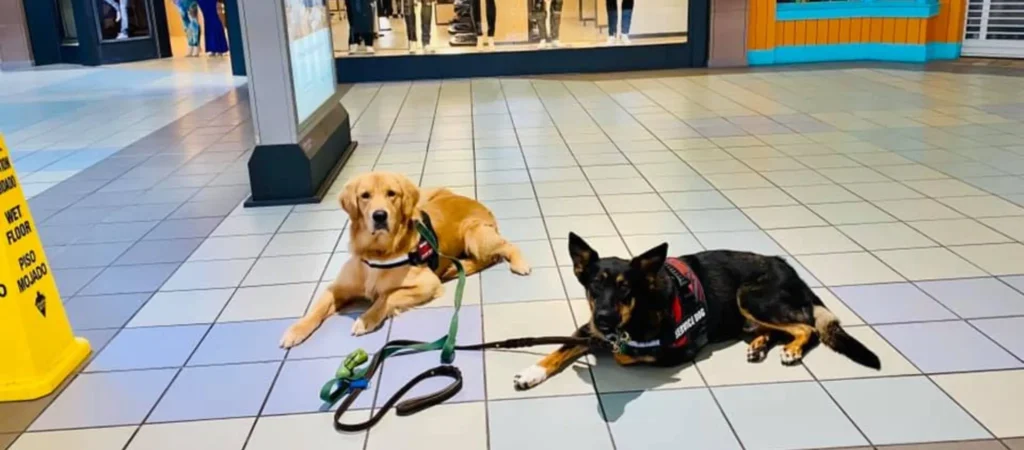
- Under Table Positioning: Resting quietly under furniture in restaurants or waiting areas.
- Leave-It and Ignore Distractions: Ignoring dropped food, other pets, and sudden noises.
- Task Performance in Public: Reliably performing trained tasks even with distractions.
Michigan Dog Training provides a structured curriculum to help teams master these foundational milestones.
Advanced Behaviors for Public Reliability
To move beyond the basics, service dogs also need service dog training that strengthen consistency in challenging settings. These include:
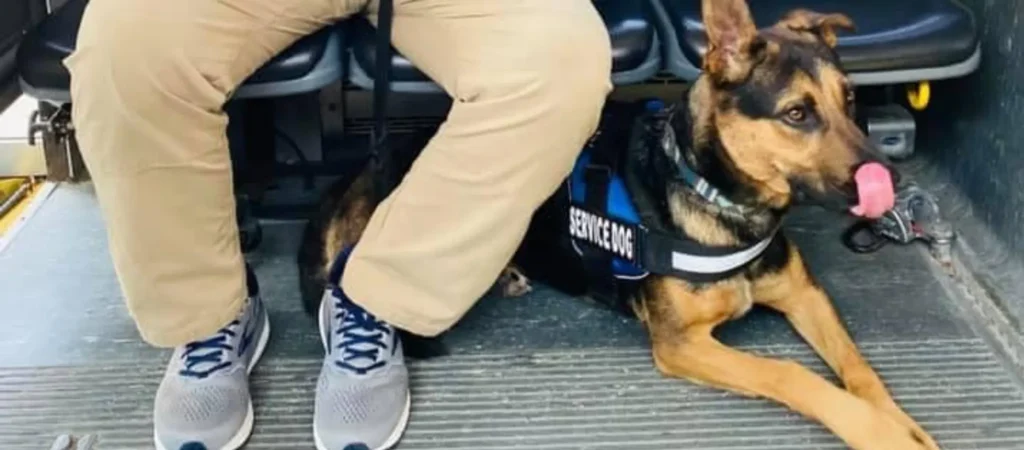
- Under: Lying quietly under tables or benches
- Leave It: Resisting temptations such as food or toys
- Ignore Distractions: Maintaining focus in busy environments
Practicing these advanced cues on a regular basis enhances a dog’s confidence and overall reliability, ensuring outings are smoother and more manageable for handlers.
How Should Handlers Prepare for the Public Access Test (PAT)?
The Public Access Test (PAT) evaluates whether a service dog and handler can function safely and appropriately in public settings. Although not mandated by the ADA, it is an important benchmark of readiness and a valuable confidence-building tool for both teams and the public.
Evaluation Criteria for the PAT
To ensure that a service dog and handler team is fully prepared for public work, evaluators look at several important benchmarks. These include demonstrating obedience certifications, such as the AKC Canine Good Citizen, performing trained tasks reliably in public environments, maintaining calm behavior despite distractions, and showing consistent handler control with clear communication. Meeting these standards reassures the community of the team’s professionalism and reliability
Training Strategies for Success
Preparing for the PAT requires a thoughtful, step-by-step approach. Handlers should practice in environments that mirror busy public settings, gradually introduce distractions in a positive manner, and combine task performance with proper public etiquette. Conducting mock tests with trainers provides valuable feedback, while refining routines based on observed challenges strengthens overall performance.
At Michigan Dog Training, these strategies are built into structured PAT preparation, helping teams progress with confidence and clarity.
Benefits of PAT Certification
Although the PAT is optional, certification delivers meaningful advantages. It offers stronger public recognition and credibility, provides documentation that may be useful for housing, travel, or workplace accommodations, and gives handlers added reassurance of their team’s reliability in high-pressure or stressful situations. This recognition not only boosts handler confidence but also fosters smoother interactions with the public.
What Are Handler Rights and Responsibilities Under the ADA?
The ADA grants service dogs access to nearly all public areas, but it also requires that dogs be under control and properly trained. Understanding these rights and responsibilities helps handlers advocate for themselves while maintaining professionalism in public.
ADA Definitions: Service Dogs vs. Emotional Support Animals
| Category | Service Dog | Emotional Support Animal |
|---|---|---|
| Definition | Task-trained for a disability | Provides comfort only |
| Public Access | Full access guaranteed | No guaranteed access |
| Task Requirement | Required | Not required |
| Documentation | Not required under ADA | May be required for housing |
This clear distinction is vital for understanding public rights and ensuring compliance with federal law.
Handler Responsibilities in Public Spaces
Handlers must:
- Keep dogs leashed, harnessed, or tethered
- Answer two permitted legal questions: “Is this a service dog?” and “What task does it perform?”
- Take responsibility for any damages or injuries
- Avoid using the dog outside of disability-related tasks
By following these guidelines, handlers protect their own rights while maintaining community trust.
How Can Handlers Improve Their Skills for Effective Public Access?
Handlers play a vital role in their dog’s success. Developing their own skills ensures consistency, confidence, and advocacy in public.
Best Practices for Public Interactions
When handlers are approached in public, they can set the tone for the interaction by responding calmly and professionally. Offering simple explanations of the dog’s role, maintaining confident body language, and speaking politely to staff or bystanders helps create understanding and reduce tension. Carrying printed information cards can also be useful for moments when a quick, clear response is needed. By approaching these interactions with preparation and composure, handlers build trust and smooth their experience in public spaces.
Building Handler Confidence
Confidence is developed over time and reinforced through consistent practice. Techniques such as mindful breathing before and during outings help handlers remain steady even when situations feel overwhelming.
Visualizing successful scenarios reduces anxiety, while support groups allow handlers to share strategies and learn from others’ experiences. Each of these practices not only improves handler well-being but also supports a calm and reliable service dog. A confident handler provides their dog with clear guidance, reducing stress for the entire team.
Responding to Service Dog Stress
Despite thorough training, service dogs may show signs of stress in public. Common signals include yawning, pacing, or whining, which indicate the dog is becoming uncomfortable. Handlers can respond effectively by taking short breaks, moving to a calmer environment, or revisiting familiar cues that reassure the dog and rebuild focus. Addressing stress promptly ensures the dog remains comfortable and maintains performance, while also preserving the handler’s confidence in challenging settings.
How Does Public Access Training Differ by Service Dog Type?
Different types of service dogs face unique challenges in public spaces, and their training must be tailored to reflect those specific responsibilities. While all service dogs require strong obedience and composure, the tasks they perform and the environments they navigate vary widely. Recognizing these differences helps ensure that each dog receives the right preparation to support their handler effectively.
Psychiatric Service Dogs
Psychiatric service dogs must detect emotional distress and provide subtle, reliable responses. Training emphasizes skills such as deep pressure therapy and ignoring sudden noises. Service dog training is essential for these skills.
Mobility Assistance Dogs
Mobility dogs must navigate obstacles and provide balance support. Training focuses on maneuvering through tight spaces and maintaining a consistent heel.
Diabetic Alert Dogs
Diabetic alert dogs must detect blood sugar changes and signal their handler discreetly. Training includes practicing scent detection in food-rich environments and delivering subtle alerts in public.
The Public Access Test (PAT) is a formal evaluation of a service dog team’s readiness for public environments, measuring obedience, task execution, and distraction management in simulated real-world scenarios. Although not mandated by the Americans with Disabilities Act (ADA), a PAT is highly recommended to ensure the service dog can perform essential tasks and behave properly in public.
Pettable, Public Access Test for Service Dogs (2024)
How Can You Choose the Right Public Access Training Program?
Selecting the right program is one of the most important decisions a handler will make, as the quality of training directly influences the dog’s long-term success in public settings. A well-structured program not only teaches the dog essential skills but also educates handlers to recognize stress, apply positive reinforcement, and advocate for their rights under the ADA. By carefully evaluating options, handlers can ensure they choose a program that balances professionalism, compassion, and proven results.
Evaluating Training Providers
When comparing options, look for programs that provide:
- Certified and experienced trainers
- Customized training plans tailored to each team
- Reward-based, transparent methods
- Ongoing support and follow-up after program completion
The Role of Technology in Training
Modern training programs may also use innovative tools to accelerate progress, such as:
- Wearables to track health and performance
- Mobile apps for training reminders and progress tracking
- VR simulations to replicate real-world scenarios
Costs and Timeframes for Training Programs
The investment of time and money varies depending on the type of program:
- Board & Train: Typically 4–8 weeks, costing around $4,000–$6,500
- Private Lessons: Usually 12–20 sessions, averaging $150–$200 per session
- Group + Coaching: Often 8–12 weeks in duration, with costs ranging from $1,200–$2,500 total
Michigan Dog Training provides customizable programs to fit a range of needs, budgets, and schedules.
How Can Michigan Dog Training Support Your Service Dog Journey?
Completing public access training is only the beginning of a lifelong partnership between handlers and their service dogs. Continued practice, consistent reinforcement, and access to professional guidance are essential for long-term success. At Michigan Dog Training, we provide tailored programs, ongoing coaching, and supportive community resources to help you and your dog maintain confidence in public settings. From the very first lesson to navigating complex environments with ease, our team is dedicated to ensuring that both you and your service dog thrive together every step of the way.