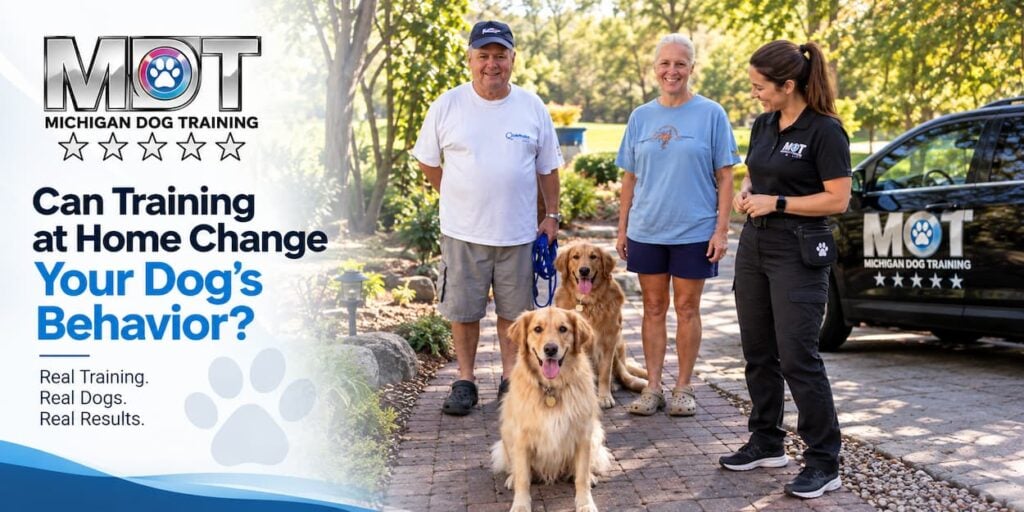
When we train a dog, we do not only want to see good behavior during a lesson. We want those skills to work when the doorbell rings, a visitor arrives, or a walk becomes distracting. That is why in-home dog training in Michigan can be such a practical option for owners who want training connected to everyday life.
With in-home training for dogs, we can work around the situations that shape a dog’s behavior every day. Instead of asking a dog to learn only in an unfamiliar setting, we can observe how it responds in its own environment. This gives us useful context and helps us focus on behaviors that matter most to the household.
Why Can Training at Home Be More Practical?
Home is where many behavior problems first become noticeable. A dog may jump on guests, rush toward the door, pull during walks, bark at household sounds, or struggle to settle when the family is busy. These behaviors can be difficult to recreate accurately in a training facility.
When we provide instruction in the home, we can see the setting where these habits occur. We can observe the dog’s responses and help the owner practice better alternatives within that same environment.
Our goal is not simply to teach a command. We want owners to understand how to use that command during real situations. That difference can make training easier to maintain after the session ends.
What Can We Address During Home Training?
The exact focus depends on the dog and the owner’s goals. We may work on basic obedience, household manners, leash behavior, impulse control, recall, polite greetings, or responses to everyday distractions.
Common areas may include:
- Waiting calmly at doors
- Reducing jumping during greetings
- Improving leash manners
- Building reliable recall
- Teaching place and settling behaviors
- Improving impulse control
- Managing reactions to people or other dogs
- Creating clearer household routines
We do not assume that every dog needs the same plan. Age, temperament, history, environment, and current behavior all influence how training should progress.
How Does the Home Environment Help Us Understand Behavior?
Dogs respond to their surroundings. A behavior that appears minor during a controlled lesson may become much stronger at home because the dog has learned a particular routine.
For example, a dog may become excited when someone approaches the front door. Another may react when it sees people through a window. Some dogs struggle when visitors enter the home. Others have difficulty settling when family activity increases.
By observing these patterns where they naturally occur, we can identify useful training opportunities. We can also help owners change the way they respond to the behavior.
This approach makes training more relevant because the owner can practice the same skill immediately within the dog’s normal routine.
Does Home Training Replace Public Practice?
No. Home instruction can establish an important foundation, but dogs also need to learn how to behave in different environments.
Once a dog understands a skill, we can encourage owners to practice it around suitable distractions. A calm response in the living room may need to become a calm response on a neighborhood walk. A reliable recall in the yard may eventually need practice in more challenging surroundings.
This gradual progression helps dogs learn that good behavior is not limited to one location.
Why Is Owner Participation So Important?
Owners play a central role in long-term behavior change. We can provide instruction, demonstrate techniques, and explain why certain responses work, but daily practice happens with the family.
Research published by the American Veterinary Medical Association notes that behavior and training are important components of responsible dog ownership. Training can also help strengthen communication between people and their dogs.
For that reason, we focus on practical skills that owners can continue using between sessions. Consistency matters more than occasional intensive practice. A few minutes of appropriate training during ordinary routines can reinforce what a dog has learned.
When Is In-Home Training a Good Choice?
Home-based instruction can be useful when the main concerns occur inside or around the household. It may also suit owners who want individualized guidance rather than a group setting.
We may recommend focusing on home routines when owners report issues such as door rushing, jumping, household distractions, poor manners, or difficulty settling. Other concerns may require private sessions, group classes, Day Training, Board and Train, or more specialized behavior support.
The right format depends on the dog’s needs rather than a one-size-fits-all approach.
What Should Owners Practice Between Sessions?
We encourage owners to make training part of normal activities rather than treating it as a separate chore. Owners can practice waiting before meals, settling while people move around the home, responding to recall cues in appropriate spaces, and walking calmly during regular outings.
The most useful practice is often simple and consistent. Repeating a behavior correctly helps make expectations clearer to the dog.
It is also important to recognize progress. A dog that once rushed toward every visitor may first learn to pause for a few seconds. That small improvement can become the foundation for a more reliable response.
How Can Home Training Support a Better Relationship?
Training is ultimately about communication. When owners know how to give clear cues and reinforce appropriate behavior, dogs receive more predictable guidance.
That can change everyday interactions. Walks may become easier to manage. Greetings can become calmer. Household routines can feel more organized. Owners may also become better at recognizing what their dogs are communicating through behavior.
We see training as an ongoing process rather than a single event. Skills become meaningful when they continue to work after the trainer leaves.
What Makes In-Home Training Worth Considering?
The greatest advantage of in-home dog training in Michigan is its connection to real life. Training takes place where many habits begin, giving owners a chance to address behavior within the environment that matters most.
For owners considering in-home training for dogs, Michigan Dog Training offers in-home instruction as part of its broader range of canine training services. The practical value is not simply what happens during a session. It is the ability to take those lessons into daily routines and continue building better behavior at home, outdoors, and wherever life with a dog takes the family.
FAQs
- How long does in-home dog training take?
The time needed varies by the dog’s age, behavior, training history, and goals. Consistent practice between professional sessions can support steady progress.
- Can puppies receive in-home training?
Yes. Puppies can learn household manners, basic obedience, leash skills, recall, impulse control, and appropriate social behaviors through structured instruction.
- Is in-home training suitable for older dogs?
Yes. Older dogs can learn new behaviors and improve existing habits. The training approach should account for their experience, temperament, and individual needs.
- Can in-home training address leash pulling?
It can. Owners can learn techniques for improving leash behavior and then practice them during regular walks. Progress depends on consistency and the dog’s individual behavior.
- Should dogs continue training after professional sessions?
Yes. Continued practice helps maintain learned behaviors. Owners should reinforce appropriate responses during everyday activities so training becomes part of the dog’s routine.