
Dog Training in Farmington, MI for Calm, Confident Dogs Downtown
Downtown Farmington is full of everyday activity, from people gathering around Riley Park to busy sidewalks along Grand River Avenue. For a dog that gets overly excited around strangers, barks when someone approaches, or struggles to settle in unfamiliar surroundings, these outings can feel overwhelming. Professional dog training in Farmington, MI helps build the manners, confidence, and self-control needed for calmer experiences at home and around town.
- 45 Years of Experience
- In-Home Lessons in Farmington
- Plymouth Training Facility
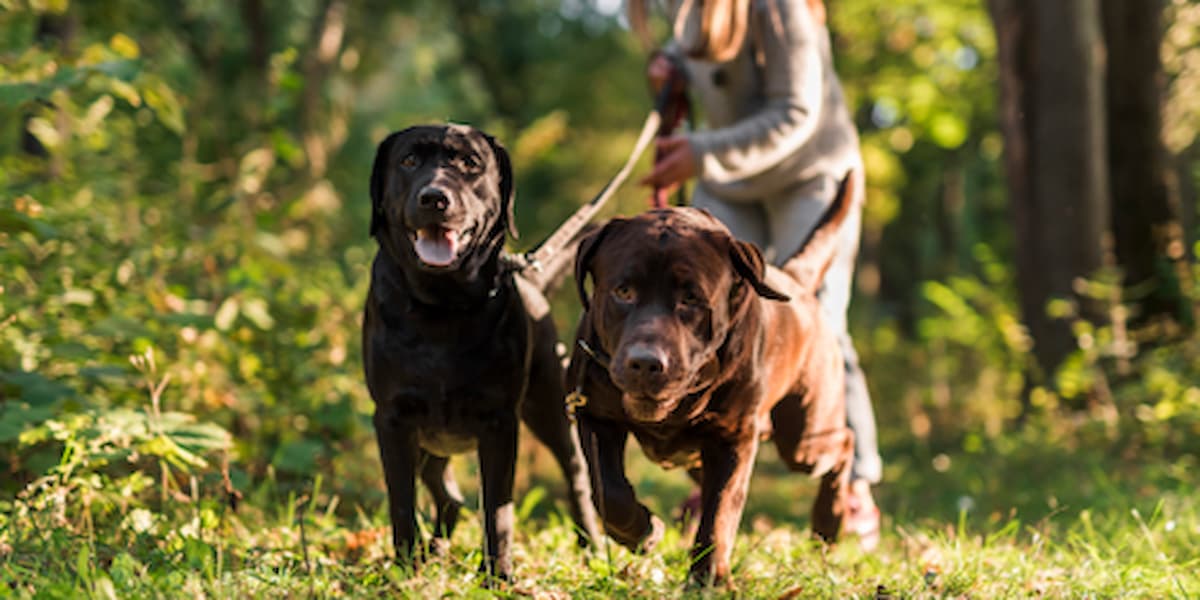
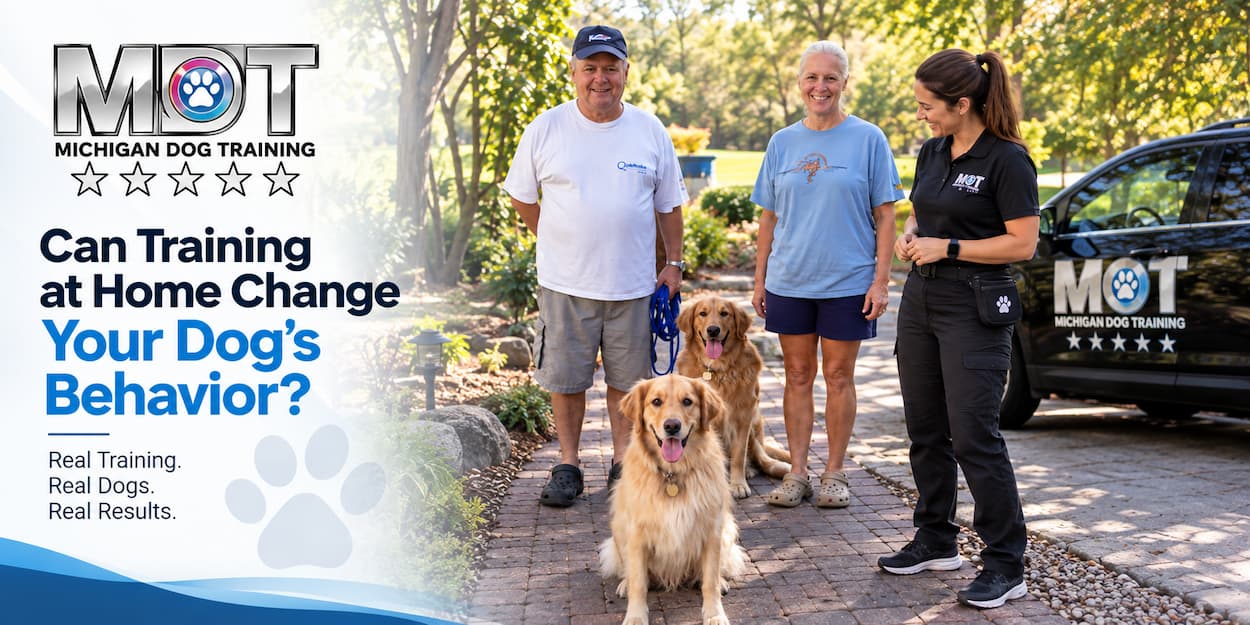
At Michigan Dog Training (MDT), we work with Farmington owners who want their dogs to feel more comfortable around visitors, unfamiliar sounds, and everyday distractions. Our approach starts with understanding each dog’s behavior and teaching owners how to encourage calm, appropriate responses. We offer In-Home Lessons in Farmington, along with Private Lessons, Board and Train, Day Training, puppy and group classes, Day Care, and Boarding at our Plymouth facility. Under the leadership of Michael Burkey, who brings 45 years of training experience, we help families develop practical obedience skills they can use beyond formal lessons.
Four Common Dog Behavior Problems and How We Address Them
Two dogs may bark at the same passing stranger for completely different reasons. One might be frightened, while the other is excited or frustrated.
Understanding the reason behind a behavior helps us choose an appropriate training approach.
1. Barking and Lunging at Other Dogs
The challenge: Your dog notices another animal, pulls hard, barks, or lunges before you can regain its attention.
Our approach: We identify triggers, work at manageable distances, and teach better handler focus, leash responses, and impulse control.
2. Fearful Behavior Around Unfamiliar People
The challenge: Your dog freezes, retreats, growls, or becomes uncomfortable when visitors or strangers approach.
Our approach: We introduce manageable experiences, recognize early signs of discomfort, and work toward greater confidence without forcing interactions.
3. Jumping and Overexcitement
The challenge: Your dog becomes so excited around guests, family members, or other dogs that familiar commands seem to disappear.
Our approach: We develop polite greetings, waiting skills, place commands, and calmer responses through consistent instruction.
4. Ignoring Commands Around Distractions
The challenge: Your dog responds at home but stops listening when traffic, wildlife, people, or unfamiliar sounds appear.
Our approach: We strengthen foundational obedience and gradually practice around more challenging distractions.
Every behavior has a context. We work with owners to understand that context before deciding which training skills need the most attention.
Understanding Your Dog's Body Language
Dogs communicate through posture, movement, facial expressions, and changes in attention.
Recognizing these signals can help owners respond before barking, lunging, or avoidance becomes more intense.
| What you notice | What it could indicate | A helpful owner response |
|---|---|---|
| Stiff posture and intense staring | Heightened arousal or discomfort | Create distance and redirect attention |
| Turning away or moving backward | Uncertainty or desire for space | Allow room and avoid forced greetings |
| Pulling toward another dog | Excitement, frustration, or interest | Reinforce calm attention at a suitable distance |
| Freezing during an interaction | Fear, uncertainty, or increased tension | Stop the interaction and reassess |
| Repeated barking at a trigger | Fear, frustration, excitement, or alerting | Identify the trigger and reduce difficulty |
These signals do not diagnose a dog’s emotional state on their own. We consider the complete situation, behavior history, and body language before recommending training.
Three Steps Toward Better Handler Communication
Effective obedience involves more than knowing the right commands. Owners also need to understand when to use them and how to reinforce appropriate responses.
Step 1: Recognize the Trigger
We begin by identifying the situations that create problems. For example, does your dog react only when another dog approaches closely? Does barking begin when someone enters the home? Is your dog more nervous around moving bicycles than stationary people? Recognizing these patterns helps establish realistic training goals.
Step 2: Teach an Alternative Response
Once we understand the behavior, we work on something useful the dog can do instead. This may include looking toward the handler, moving calmly past a distraction, responding to the place command, or maintaining a loose leash. Our approach emphasizes teaching dogs what to do, rather than relying only on correcting unwanted behavior.
Step 3: Practice in Everyday Situations
A skill learned in one environment needs practice before it becomes reliable elsewhere. We gradually introduce movement, sounds, unfamiliar people, and other distractions while teaching owners how to adjust the difficulty. This helps transfer learned skills into everyday routines.
Dog Training That Fits Farmington's Everyday Environments
Farmington offers several settings where dogs encounter unfamiliar sounds, people, and activity. These situations make handler communication and impulse control especially valuable.
Shiawassee Park: Managing Passing Distractions
Shiawassee Park includes walking trails, athletic areas, and family recreation spaces. Dogs may encounter children playing, runners, other pets, and unfamiliar movement. For a reactive dog, these distractions can create challenges. Owners can begin reinforcing attention and leash manners in quieter areas before introducing more activity.
Downtown Farmington: Building Calm Behavior
Downtown Farmington’s Grand River Avenue corridor features storefronts, vehicle traffic, pedestrians, and everyday neighborhood activity. Dogs that react to movement or unfamiliar people need practice remaining responsive to their handlers. Training helps owners manage leash tension, reinforce familiar commands, and recognize when their dogs need additional space.
Riley Park: Recognizing When an Environment Is Too Busy
Downtown Riley Park hosts community gatherings and the seasonal Rhythmz in Riley Park concert series. Music, crowds, and changing activity can be overwhelming for sensitive dogs. Not every dog needs to participate in a crowded event. Recognizing when to choose a quieter environment is an important handling skill. Farmington requires dogs to remain on leashes no longer than six feet and under their owners’ control in city parks.
Which Training Approach Fits Your Dog's Behavior?
A dog experiencing fear or reactivity may need different instruction from a puppy learning basic manners. We offer multiple programs so Farmington owners can choose training that matches their needs.
For behavior problems at home: Our In-Home Dog Training helps with barking at visitors, door manners, jumping, household boundaries, and familiar triggers.
For individual behavior concerns: Our Private Dog Training Lessons focus on leash reactivity, fearful behavior, obedience challenges, and direct owner coaching.
For repeated professional instruction: Our Day Training includes 4-, 6-, and 8-week programs. Dogs train during the day and return home afterward.
For intensive obedience training: Our Board and Train Program combines structured weekday training, real-world practice, and owner instruction. Dogs generally spend weekends at home, with optional weekend boarding available.
Puppy Classes, Advanced Obedience, and Dog Care
Dogs building foundational skills can begin with our Puppy Training Classes or Basic Manners. Additional classes include AKC Canine Good Citizen, Off-Leash Freedom, Advanced CGC, Nosework, Dog Acting (Tricks), and Perfect Practice.
At our Plymouth facility, we also offer Dog Day Care, Dog Boarding, and specialized Service Dog Training. For dogs with serious reactivity or aggression-related concerns, we recommend an individual assessment to determine a safe, appropriate starting point.
Book Your FREE Behavior Consult to compare your options.
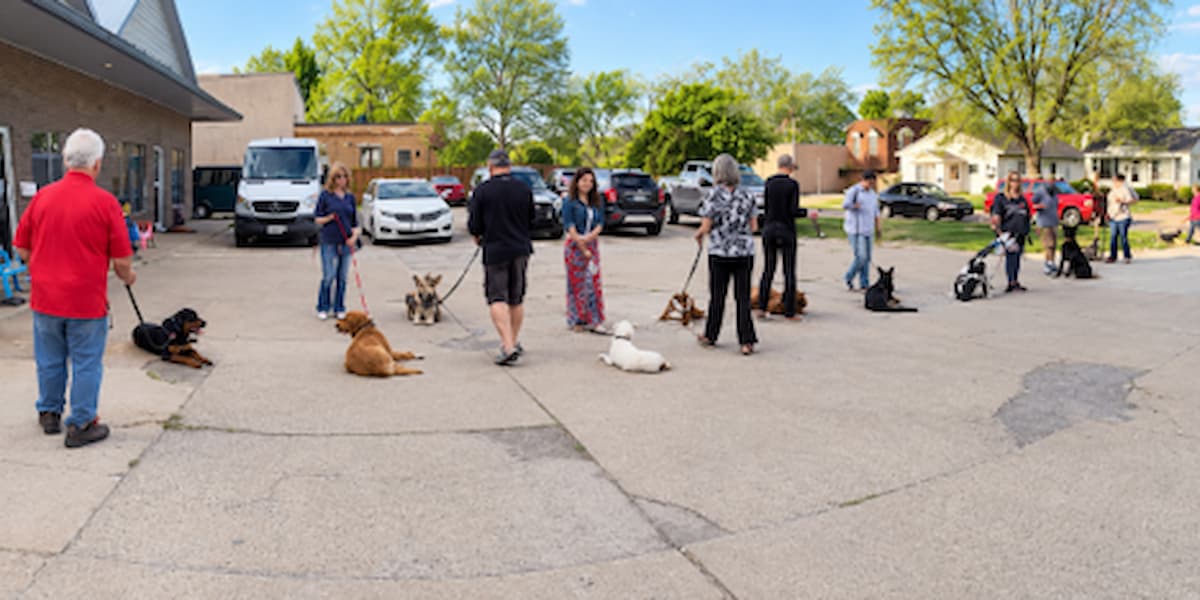
What to Do When Your Dog Reacts During a Walk
When a dog begins barking or lunging, the immediate priority is managing the situation rather than trying to teach a completely new behavior.
Use these principles during everyday outings:
- Create space: Move far enough from the trigger that your dog can begin responding again.
- Watch body language: Notice changes in posture, movement, and attention before the reaction escalates.
- Use familiar cues: Ask for a behavior your dog already understands, such as attention or turning with you.
- Reward appropriate responses: Reinforce calm attention and successful choices.
- Adjust the environment: Choose quieter routes when your dog is not ready for closer encounters.
These steps support training but do not replace an individual behavior assessment when aggression or bite risks are involved.
A Michigan Dog Training Success Story: Quincy's Progress
Quincy came to us with significant fear around unfamiliar people and other dogs. His owners, Erin and Mike Pinkleton, wanted help building his confidence and improving everyday interactions.
Through eight private lessons with Michael Burkey, Quincy worked on obedience, attention, and becoming more comfortable around people.
As training progressed, he became more willing to approach unfamiliar people, accept treats, and participate in guided interactions. His owners also gained confidence in understanding his behavior and handling difficult situations.
Quincy’s progress shows why individualized training matters. Instead of expecting every dog to respond to the same approach, we adapt instruction to the dog’s behavior and comfort level.
Explore more Michigan Dog Training success stories.
Why Farmington Dog Owners Choose Michigan Dog Training
1. Behavior Assessment Before Program Selection
We look at triggers, canine body language, and behavior history before recommending training, helping owners understand what their dogs need.
2. Practical Communication for Everyday Challenges
We teach owners how to manage distractions, reinforce appropriate responses, and guide their dogs with clearer, more consistent handling.
3. Individualized Training With Continued Guidance
Our programs combine professional instruction, hands-on owner coaching, and follow-up learning opportunities to support progress beyond training sessions.
Experienced Dog Trainers Serving Farmington
Michael Burkey’s 45 years of experience include Police K9 training, Search and Rescue K9 leadership, and canine behavior work. Michigan Dog Training has been featured on Channels 2, 4, and 7 and is trusted by veterinary professionals who have chosen MDT to train their own dogs. We also offer a professional guarantee and continued owner support.
Our training facility is located at 1031 Cherry Street, Plymouth, MI 48170, accessible from Farmington through the surrounding road network, including the I-275 corridor. Facility-based programs take place in Plymouth, while In-Home Dog Training is available in Farmington.
Frequently Asked Questions About Dog Training in Farmington, MI
Can professional training help my dog stop reacting to other dogs?
Yes. We work with dogs that bark, lunge, or become overwhelmed around other animals. Training focuses on understanding the cause, improving handler communication, and developing more controlled responses.
What is the difference between dog reactivity and aggression?
Reactivity is an intense response to a trigger, such as barking, lunging, or pulling. Aggression involves threatening or harmful behavior. These behaviors can overlap, so understanding the dog’s history and circumstances is important.
Can I arrange private dog training in my Farmington home?
Yes. Our In-Home Dog Training serves Farmington households. We help address visitor reactions, household boundaries, leash manners, barking, and obedience in familiar surroundings.
Can I practice obedience with my dog at Shiawassee Park?
Yes. Shiawassee Park offers walking areas where owners can reinforce learned commands. Farmington requires dogs to remain controlled on leashes no longer than six feet. Choose a quiet setting that matches your dog’s training level.
Should a reactive dog attend group classes?
Some dogs can progress into structured group learning. Others need individualized training first. We evaluate the dog’s behavior and responsiveness before recommending group instruction.
Build Better Communication With Your Dog in Farmington, MI
You should not have to guess how to respond every time your dog encounters another person, animal, or unfamiliar situation.
At Michigan Dog Training, we help Farmington owners understand their dogs, develop more reliable obedience, and build practical handling skills through personalized training.
Whether your goal is calmer walks, better visitor manners, or more confidence around distractions, we’re ready to help you move forward.
Tell us what triggers your dog’s reactions and what you want to improve. We’ll help you choose an appropriate training plan.
- Michigan Dog Training, 1031 Cherry Street, Plymouth, MI 48170
- Phone: (734) 892-1447