Service Dog Training IN MICHIGAN

Service Dog Training in Plymouth, Michigan | Board & Train and Owner Training
A properly trained service dog can provide greater independence, confidence, safety, and support for a person with a disability. However, purchasing a fully trained service dog from an established organization can be financially out of reach for many people. You may also already own a dog that has the temperament, health, and potential to become a successful service dog.
Michigan Dog Training offers professional service dog training in Plymouth, Michigan, for qualified dogs and handlers throughout Metro Detroit and Southeast Michigan. Our programs combine reliable obedience, appropriate public-access behavior, individualized disability-related task training, and handler education.
We train service dogs to assist with:
- Mobility support
- Post-Traumatic Stress Disorder (PTSD)
- Panic attacks and anxiety-related disabilities
- Diabetic alert
- Medical alert
- Hearing alert
Because every person’s disability-related needs are different, each service dog training program begins with an individualized consultation and evaluation.
What Is a Service Dog?
Under the Americans with Disabilities Act (ADA), a service dog is individually trained to perform work or specific tasks for a person with a disability. The task must be directly related to the person’s disability.
A service dog is different from an emotional support animal. Providing comfort through companionship alone does not qualify as a trained service-dog task under the ADA. For example, a dog trained to recognize signs of an approaching panic attack and take a specific action to lessen its effects may qualify as a psychiatric service dog. A dog whose presence simply makes someone feel calmer does not qualify on that basis alone.
Service dogs are expected to remain under their handler’s control and behave appropriately in public. Learn more from the U.S. Department of Justice’s official service-animal guidance.

Two Service Dog Training Options
Michigan Dog Training offers two pathways for qualified dog-and-handler teams:
A. 8-Week Service Dog Board and Train
Our intensive 8-Week Service Dog Board and Train program provides a professionally developed foundation for service-dog work. This option may be a good fit for handlers who want their dog to receive concentrated daily training, structured repetition, and professional guidance.
Depending on the handler’s needs and the dog’s suitability, training may include:
- Foundational and advanced obedience
- Loose-leash walking and controlled movement
- Reliable responses around distractions
- Calm behavior in public settings
- Settling quietly beneath tables or beside the handler
- Ignoring food, people, dogs, noises, and environmental distractions
- Disability-related service tasks
- Public-access preparation
- Handler transfer lessons and continued practice instructions
- Appropriate training equipment
Board and Train establishes an intensive professional foundation, but the handler remains an essential part of the process. Transfer lessons, regular practice, continued reinforcement, and maintenance training are necessary to help the dog perform reliably with the handler in everyday life.
Learn more about our 8-Week Service Dog Board and Train program.
B. 20-Lesson Train Your Own Service Dog Program
The Train Your Own Service Dog program is designed for people who want to participate actively in training their own dog with professional guidance from Michigan Dog Training.
This approximately five-month program includes up to 20 weekly or biweekly training sessions. Training takes place through a combination of private lessons, appropriate group instruction, sessions at the MDT facility, and training in real-world public environments.
Public-access instruction may occur in locations such as pet-friendly businesses, shopping areas, restaurants, and other environments appropriate for the dog’s current level of training and applicable access laws.
The program may include:
- 20 private and/or group training sessions
- Foundational and advanced obedience
- Public-access behavior and preparation
- Customized disability-related task training
- Handler education and coaching
- Training equipment
- Canine Good Citizen testing
- AKC Community Canine/Advanced Canine Good Citizen testing
- AKC Urban Canine Good Citizen testing
- Guidance for practicing and generalizing skills at home and in public
This owner-involved option requires consistent practice between sessions. Successful service-dog development is a team effort: Michigan Dog Training provides the professional instruction and training plan, while the handler reinforces those skills throughout daily life.
Service Dog Tasks We Train
Tasks are selected according to the handler’s disability-related functional needs, daily routine, physical abilities, environment, and the dog’s capabilities. Examples may include:
Mobility Service Dog Training
Depending on the handler’s needs and the dog’s size and physical suitability, mobility-related tasks may include:
- Retrieving dropped or requested items
- Carrying lightweight objects
- Opening or closing accessible doors or drawers
- Tugging off appropriate clothing items
- Delivering an object to another person
- Activating an accessible button
- Providing trained assistance during daily routines
Any weight-bearing or physically demanding mobility task must be evaluated carefully for the dog’s size, structure, health, and safety.
PTSD Service Dog Training
A PTSD service dog may be trained to perform tasks such as:
- Interrupting escalating anxiety or distress
- Providing trained deep-pressure contact
- Waking the handler from nightmares
- Creating space around the handler when cued
- Guiding the handler toward an exit or designated person
- Interrupting repetitive or harmful behaviors
- Retrieving medication or another designated item
Panic Attack and Anxiety Service Dog Training
For a person whose anxiety or panic attacks are related to a disability, trained tasks may include:
- Recognizing behavioral signs associated with an episode
- Interrupting escalating symptoms
- Providing trained tactile stimulation
- Performing deep-pressure contact
- Guiding the handler to a quieter location or exit
- Retrieving a designated item or another person
The dog must be trained to take a specific action. Comfort provided merely by the dog’s presence is not considered a service-dog task under the ADA.
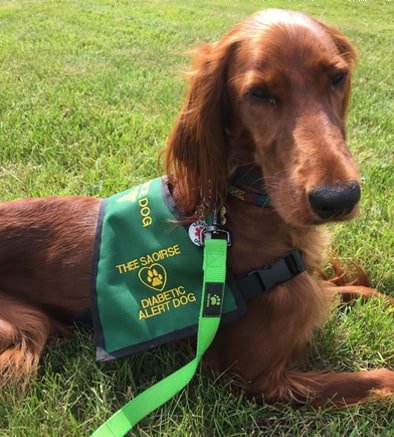
Diabetic Alert Dog Training
A Diabetic Alert Dog may be trained to recognize a scent associated with a significant blood-glucose change and provide a trained alert behavior. Alert behaviors may include a nose nudge, paw touch, retrieve, or another clearly recognizable response.
For Diabetic Alert Dog training through our Train Your Own Service Dog program, the handler must be able to collect and provide properly prepared low-blood-sugar breath samples associated with readings of 70 mg/dL or below. We will provide instructions regarding sample collection, labeling, storage, and training use.
A Diabetic Alert Dog is an additional layer of support and does not replace a continuous glucose monitor, prescribed medication, testing equipment, or medical care.
Medical Alert and Response Dog Training
Medical alert or response work is customized to the individual. Depending on the handler’s condition and the dog’s demonstrated abilities, tasks might include:
- Providing a trained alert or response
- Retrieving medication or emergency supplies
- Activating an alert system
- Finding or notifying another person
- Providing a trained behavior during or following a medical episode
- Guiding the handler to a seat, exit, or safer location
Not every dog can reliably detect an oncoming medical event. When reliable advance detection cannot be established, response tasks may still provide meaningful assistance.
Hearing Alert Dog Training
Hearing service dogs may be trained to alert their handler to important sounds, including:
- Doorbells or knocking
- Alarm clocks
- Timers
- Smoke or safety alarms
- A person calling the handler’s name
- Telephones or other electronic notifications
- A crying baby
- Other important household sounds
The dog can be trained to make physical contact with the handler and then lead the handler toward the sound or respond with another designated alert behavior.
Does My Dog Have the Right Temperament?
Not every dog is suited for service work, regardless of breed or how much the owner loves the dog. Service dogs must be comfortable and dependable in changing environments while remaining focused on their handler.
Candidates should generally be:
- Friendly and safe around people and other dogs
- Confident or appropriately recoverable in unfamiliar environments
- Comfortable around common sights, surfaces, sounds, and movement
- Motivated to learn and work with the handler
- Physically healthy enough for the intended tasks
- House-trained and capable of remaining settled appropriately
- Free from behavior that would create an unreasonable public-safety concern
Fear, reactivity, aggression, significant environmental sensitivity, poor recovery, or health limitations may prevent a dog from becoming a public-access service dog. Suitability is determined individually, and acceptance into training does not guarantee that a dog will ultimately be appropriate for service work.
Dogs entering the Train Your Own Service Dog program must be at least five months old. Younger puppies can begin developing the socialization, confidence, manners, and foundational obedience needed for future service-dog training.
Starting a Puppy for Future Service Work
If you have a puppy, early preparation can make a significant difference. We may recommend beginning with puppy training and Canine Good Citizen preparation before entering the Train Your Own Service Dog or Service Dog Board and Train program.
Early training focuses on:
- Positive exposure to different people and appropriate dogs
- Confidence on unfamiliar surfaces and in new environments
- Calm handling and grooming
- House-training and crate training
- Engagement with the handler
- Foundational obedience
- Appropriate behavior around distractions
- Recovery from unexpected sights and sounds
Completing puppy training does not guarantee future service-dog suitability, but it helps establish the skills and experiences needed for a more informed evaluation as the dog matures.
Public-Access Training
A service dog must do more than perform a disability-related task. The dog must also remain controlled, unobtrusive, and appropriately behaved in public.
Public-access preparation may address:
- Walking calmly through stores and shopping areas
- Remaining settled in restaurants
- Riding safely in elevators
- Navigating crowds and narrow aisles
- Ignoring other dogs, food, and unfamiliar people
- Remaining calm around carts, automatic doors, traffic, and loud noises
- Toileting appropriately
- Staying focused on the handler
- Recovering appropriately from unexpected events
Public-access training is introduced gradually and according to the dog’s readiness. Dogs in training do not automatically have public-access rights under the federal ADA; state and local laws may provide additional provisions.
Service Dog Certificates and the ADA
Upon successful completion of MDT’s requirements, graduates will receive a Michigan Dog Training Certified Service Dog Team certificate noting service dog program completion and testing as well as the following American Kennel Club (AKC) obedience and well mannered titles: Canine Good Citizen (CGC), Community Canine Good Citizen (CCGC) and the Urban Canine Good Citizen (UCGC). MDT Trainers are certified CGC Evaluators for the American Kennel Club. MDT’s Certified Service Dog certificate and three AKC titles documents completion of MDT’s high training standards for a service dog team. MDT’s certification is recognized by the U.S. Department of Transportation and meets the criteria set forth by the American’s Disability Act (ADA).
The ADA does not require a service dog to be professionally certified, registered, trained or identified by a special vest or document. The dog’s legal status depends on the handler meeting applicable disability requirements and the dog being individually trained to perform disability-related work or tasks—not on possession of a purchased certificate or identification card. So be wary of online companies who try to sell you a Service Dog card or registration that have no mean without training and testing. Read the ADA’s service-animal FAQs.
Realistic Expectations and Owner Responsibilities
Service-dog training is a substantial commitment. The timeline and outcome depend on factors including:
- The dog’s temperament, age, health, and learning history
- The complexity of the required tasks
- The handler’s needs and environments
- The dog’s ability to work around distractions
- Consistent practice and reinforcement
- The handler’s participation in transfer and follow-up training
- The dog’s continued physical and behavioral suitability
Neither enrollment nor program completion guarantees that a dog will remain suitable for public-access service work throughout its life. Skills must be maintained, and a dog’s health, behavior, and comfort should be monitored over time.
Schedule a Free Service Dog Consultation
The first step is determining whether your dog and your goals are a suitable match for one of our programs. During a complimentary consultation, Michigan Dog Training will discuss:
- Your disability-related functional needs
- The tasks you would like the dog to perform
- Your daily routine and common environments
- Your dog’s temperament, health, behavior, and training history
- Public-access expectations
- The time and participation required
- Whether the 8-Week Service Dog Board and Train or the 20-Lesson Train Your Own Service Dog program is the better fit.